[{"term":"Libraries_BA","id":0,"type":"QUICKLINKS"},{"term":"Instructions","id":1,"type":"QUICKLINKS"},{"term":"WAGO-I/O-PRO","id":2,"type":"QUICKLINKS"},{"term":"Building","id":3,"type":"QUICKLINKS"},{"term":"221","id":4,"type":"QUICKLINKS"}]
{ "@context": "https://schema.org", "@type": "BreadcrumbList", "itemListElement": [ { "@type": "ListItem", "position": 1, "name": "Homepage", "item": "https://www.wago.com/ae" }, { "@type": "ListItem", "position": 2, "name": "Solutions", "item": "https://www.wago.com/ae/solutions" }, { "@type": "ListItem", "position": 3, "name": "Power Engineering ", "item": "https://www.wago.com/ae/power-engineering" }, { "@type": "ListItem", "position": 4, "name": "Energy Storage Systems", "item": "https://www.wago.com/ae/power-engineering/energy-storage-systems" }, { "@type": "ListItem", "position": 5, "name": "Customer Application", "item": "https://www.wago.com/ae/power-engineering/energy-storage-systems/customer-application-telecontrol-technology-electric-charging-stations" } ] } [{"url":"/solutions","name":"Solutions","linkClass":null,"categoryCode":null},{"url":"/power-engineering","name":"Power Engineering ","linkClass":null,"categoryCode":null},{"url":"/power-engineering/energy-storage-systems","name":"Energy Storage Systems","linkClass":null,"categoryCode":null},{"url":"/power-engineering/energy-storage-systems/customer-application-telecontrol-technology-electric-charging-stations","name":"Customer Application","linkClass":"active","categoryCode":null}]
Customer application

Solar Fuel – Even at Night

A lack of charging infrastructure, among other factors, is slowing the advance of e-mobility in Germany. Ingenieurbüro Fehringer (IBF), an engineering consulting firm from Dortmund, might be able to advance the expansion with an innovative solution. It has developed a solar EV charging station which can provide green energy around the clock, thanks to a combination of photovoltaics and batteries. WAGO technology manages the interfaces and ensures secure data communication.

How will the federal government’s goal of one million electric vehicles on the roads in Germany be achieved by 2020? Many experts have already labeled the proposal unrealistic; there is both a lack of affordable e-vehicles with acceptable driving ranges and also an insufficient number of charging stations for the e-vehicles currently on the road. To drive, for example, from Dortmund to Minden and back, an e-vehicle with a range of 200 kilometers would have to charge somewhere along the return trip. But where? Fear of insufficient range is scaring off potential buyers.

Managing Batter Storage Systems Reliably – Here’s How WAGO Supports You:

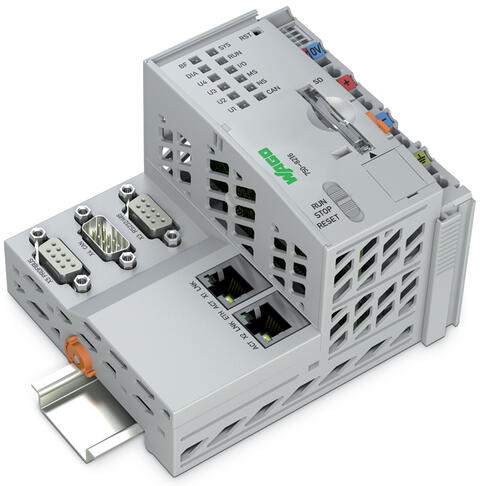
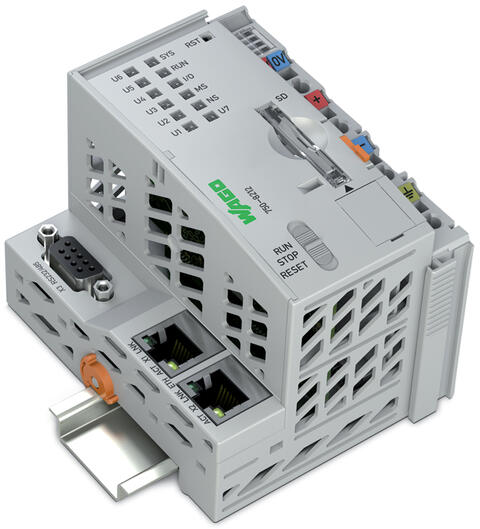
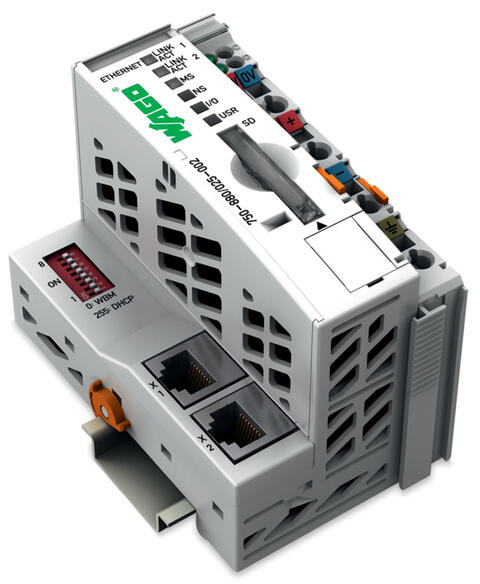
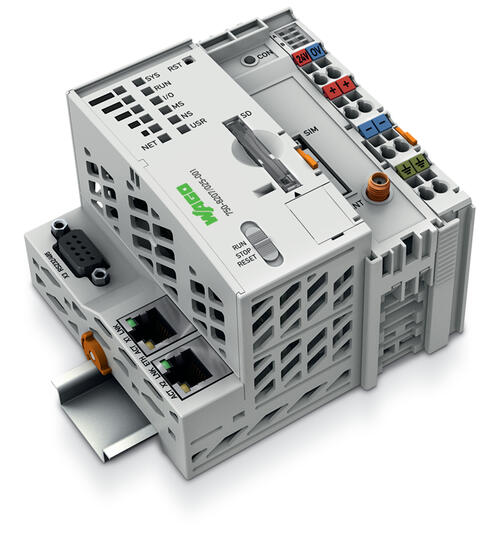
  • The WAGO Telecontrol PLC handles all the communication and interface management.
  • An integrated GSM module enables secure email and SMS communication.
  • In addition to telecontrol functions, the controller also offers visualization.
  • Serial interfaces permit communication with other systems.
Solar Electricity instead of Gasoline and Diesel

But German car manufacturers are working proactively to address this. BMW, Daimler and Ford, as well as Volkswagen and its subsidiaries Audi and Porsche, plan to jointly construct quick charging stations across all of Europe. In the first stage, a total of 400 EV charging stations are to be installed along the largest European traffic arteries by 2017. By 2020, a dense network of charging stations should cover Europe, boosting electric mobility. Innovative companies are committed to advancing the development of new fuel station technologies in parallel. An EV charging station, where e-vehicles can charge using green electricity around the clock, is among these recent projects. The approach: A photovoltaic array on the roof of the station supplies the charging columns with solar electricity. If the solar modules produce more on a sunny day than is required for charging e-vehicles and can be accommodated by the electrical grid, then the excess is fed into lithium-ion batteries. These supply the charging units at times when the modules do not provide energy – at night – so drivers can use the charging station at any time.

Blunting Midday Peaks

The concept was developed by Ingenieurbüro Fehringer (IBF) from Dortmund. “Electric mobility is the future. In the next few years, the federal government plans to invest 300 million euros in expanding the charging infrastructure,” explains CEO Nicolaj Fehringer. To ensure that his company’s EV charging stations will be a candidate for this process, IBF has already constructed a demonstration system with a 36 kilowatt-hour storage capacity in Dortmund at the corporate headquarters. “The interplay of electrical generation, storage and charging functions perfectly in this project,” says Fehringer. In addition, the solar battery provides relief for the electrical grid by capping dangerous midday peaks on sunny days – an important contribution to an energy system that must incorporate increasing numbers of renewable energy producers.

Compactness is Crucial

Admittedly, the IBF engineers initially faced several challenging questions during the design of the electric fueling station: How can the individual systems – solar modules, lithium-ion batteries, charging columns, and inverters – be efficiently connected to the control technology? How can a secure data exchange be implemented between the individual components? Which controller is compact enough, despite the high technical demands, to be accommodated inconspicuously in the control cabinet while saving space? For collaborative projects in which different technologies have to be combined in limited space, compactness is an essential requirement.

energy_referenz_fehringer_stromtankstelle_2000x1125.jpg

100 percent emission-free: The electric charging station designed by Fehringer, a company from Dortmund, is supplied exclusively by solar modules on the roof.