Interview
We are replacing estimates with real knowledge
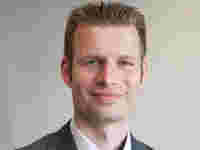
An interview with the two network experts Hans-Werner Leenen and Martin Breitenbach from NGN NETZGESELLSCHAFT NIEDERRHEIN MBH
An interview with the two network experts Hans-Werner Leenen and Martin Breitenbach from NGN NETZGESELLSCHAFT NIEDERRHEIN MBH
All of Germany is talking about the energy transition. What do you consider your biggest challenges?
Hans-Werner Leenen: We have to make the right decisions: What comes now? One scenario would be complete electrification of the grids. Perhaps soon we’ll no longer want to use fossil fuels for heating and automobiles, but only electricity and water. The electrical grid would then have to handle the entire power supply. That’s not possible with the grid as it is today.
So do we need new grids?
Leenen: Yes, but the demand differs by scenario. In the past, the need for expansion was easy to calculate, since there was only one direction of energy flow in a system dominated by large, centralized power plants. The increase in distributed energy generators and bidirectional energy flows has made it difficult to assess how to design the grids for the future. So we are going in a different direction: We first measure and see what really happens in our network and base our network expansion on that. We are replacing estimates with real knowledge.
That means monitoring takes priority?
Martin Breitenbach: Definitely. We first need to know more about our network in order to be able to make better decisions. We need to look more closely at the load flows, for example. For instance, we have local network stations that behave normally in the medium voltage ring, but there could be a significant strain on the low voltage infrastructure, since the generation by PV plants is offset by loads within the low voltage network, for example. We can detect that with current transformers and power measurement modules.
And what can you do with the insights that this provides?
Breitenbach: In an initial step, without large investments, we can use these insights to connect grids better in the medium and low voltage ranges and better distribute the prevailing load flows. In the second step, we can better prioritize planning network expansion in line with demand on the basis of information based more on measurements than estimates.
But the network expansion costs money in any case. Network operators can recoup their investments in new cable through the network charges at the right conditions, but the same is not true of digital measurement systems. But that must make your digitization more difficult, right?
Breitenbach: Indeed – the German Federal Network Agency (BNetzA) has not truly appreciated the investment in intelligence. The Federal Network Agency assumes in part that in the long term, we will increase efficiency through digitization of the network and get our income from that. But the problem is not just the initial investment costs, but also the follow-up costs that intelligent solutions entail. They lead to greater operating expenses, such as wireless communication costs. Qualified personnel is also required to support these intelligent solutions. We are cooperating with WAGO to solve this problem while continuing to advance digitization. Among other things, we have developed commissioning software that allows us to commission a large number of systems more quickly and support them more easily.
So the Federal Network Agency is providing the wrong incentives?
Breitenbach: In general, I would talk about it in terms of barriers to investment. The appreciation and reimbursement of the investments and expenses by the BNetzA are not the only hurdles. In some cases, investments in measurement, computing and telecommunications technology have been expensive to acquire and costly to operate. Furthermore, handling and sensibly distributing new data is not a trivial problem. And then there are unforeseeable, and thus unplannable, developments, in the areas of the renewable energy plants and electromobility. Therefore, our goal was first to establish a good partnership with WAGO to supply reliable hardware that is scaleable and expandable and features a Linux® platform, allowing us to use software updates to continually meet new challenges we’ll face – some of which we can’t even foresee yet.
Barriers to investment, uncertain challenges in the future: Isn’t the risk of wasted investment increasing for you?
Breitenbach: Not at all – except for the regulatory problems, we have largely eliminated our barriers to investment. Because, regardless of what developments may arise, we’re sure that we’ll need more information from the networks, and the investment here won’t be wasted We can even reduce our ongoing expenses at the same time, since the software allows us parameterize the systems with the mouse, with no need for complicated program code. Furthermore, the data is now prepared within the WAGO controller already so it can be supplied directly to multiple departments of the company right away. This allows various processes like network planning and follow-up questions to be handled more quickly and accurately, so we can work less with assumptions and more with measured values.
The power grid of the future will be dynamic and comprise many distributed producers and consumers. How far has this development already advanced in the network of the Netzgesellschaft Niederrhein (NGN)?
Leenen: Quite far, since more energy and more capacity have been fed in than drawn in the rural network territories for years already. Furthermore, the proportion of customer systems operated with co-generation and power-to-heat modules, for example, is increasing there, as well as in the urban network, and the behavior of the systems is oriented towards the energy market – meaning full offtake, neutral network behavior or maximum feed-in. No conventional profile fits these modes of operation.
Leenen: So far, use of e-vehicle charging stations has been fairly sporadic, and that’s precisely our dilemma: We’d like to get experience with effects they have on the network. What are the charging cycles like – is there an ebb and flow, allowing cables to cool off occasionally, or are we dealing with a continuous full load? We can’t tell yet.
Breitenbach: But in future, electromobility could cause big problems for us. Individual charging stations can already be problematic. But if all electrical vehicles are charged within a brief time window, for example due to exchange-driven price signals, this will put a significant strain on the network. Today’s networks are not sufficient to meet these challenges. In future as well, it will not be economical to design the networks for the theoretical maximum simultaneous loads. That’s why we want to get insight into the network and, in a further step, to establish communication with the participants so in future we can intervene to provide control. The goal is to be able to postpone the loads that arise, such as electric vehicle charging operations, to allow better network utilization over time and avoid temporarily overloads. The software on the WAGO controller allows us to achieve this as well.
A dynamic network requires dynamic reaction. What do you think of wide-range control? This method makes it possible to control all lower-level stations from a central point like the substation.
Leenen: I think it will go in that direction. But we also need to know our network better in order to allow optimal use of wide-range control. I sometimes change up to 200 lower-level stations with one controller. We need to know the points in the network with the highest and lowest voltages. But the highest and lowest values vary with the time of day. For instance, when the sun is shining, the points with photovoltaic systems are under significant strain, and high voltage predominates, but in the evening, when the electric cars are charging, the voltage is reduced elsewhere. So a certain density of measuring points is necessary. But that doesn’t mean that we have to measure at all points. With a certain minimum density of measuring points, we can draw sufficiently precise conclusions about other points in the network that have not been measured and set up wide-range control.
Are you integrating your modernization concept into the cloud?
Breitenbach: Not yet, and I actually consider the cloud inappropriate for network operation. If data from many critical systems is transferred to the cloud, this centralizes it. But I think it’s quite healthy for there to be many supply grid operators all operating different local systems. The more distributed the approaches here are, the more secure our networks are, in my opinion. In contrast, for unidirectional information transfer, we are using cloud solutions in some areas already. I can imaging that this will increase.
Let’s take a look at the future. At some point, you will have optimized your network and strengthened it at the right points. And then perhaps electromobility increases more than planned, and you have to lay new cables again. So even with the best technology, you’ll never reach an endpoint, right?
Breitenbach: That’s right, electronics and software can only achieve optimizations. The capacity of the lines and transformers represents a limiting factor above a certain point. But thanks to the digitization of our network, we know whether we still have reserves in the network, and if so how many, so we can plan measures in a more targeted way. Furthermore, wide-range control will help us to reduce voltage range problems so we don’t need to expand as much. Moreover, it is possible to reduce the strain on the equipment through demand-side management and measures such as optimized reactive power management.
To summarize in conclusion: What are the immediate advantages for you of using digital technology for network operation and planning?
Leenen: There are three points that help us immediately if we use digital technology:
NGN is a subsidiary of SWK Stadtwerke Krefeld AG and the network operator for Krefeld, Straelen and Wachtendonk. In Krefeld, NGN is responsible for all electrical grids up to the 110 kV high-voltage level and for the medium- and low-voltage levels in other network territories. In Krefeld, NGN also operators the water, natural gas and district heating networks. NGN has around 350 employees.
Hans-Werner Leenen is an authorized representative and Head of Asset Management and Planning at NGN. He is also responsible for the Technology and Standards Team.
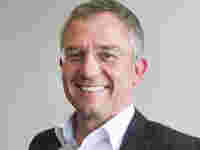
Martin Breitenbach has the job of introducing new technologies and standards. In this role, he directs the software project with WAGO for NGN. After studying electrical engineering, he also got a masters in energy economics and is considered an expert on the digitization of local network stations.