[{"term":"Libraries_BA","id":0,"type":"QUICKLINKS"},{"term":"Instructions","id":1,"type":"QUICKLINKS"},{"term":"WAGO-I/O-PRO","id":2,"type":"QUICKLINKS"},{"term":"Building","id":3,"type":"QUICKLINKS"},{"term":"221","id":4,"type":"QUICKLINKS"}]
[{"url":"/industries","name":"Industry Solutions","linkClass":null,"categoryCode":null},{"url":"/power-engineering","name":"Power Engineering ","linkClass":null,"categoryCode":null},{"url":"/power-engineering/eza-controllers","name":"EZA Controllers with WAGO Power Plant Control","linkClass":"active","categoryCode":null}]
MM-4197_reference report_MSR Glück_Foto_0097_2000x2000.jpg

EZA Controllers with WAGO Power Plant Control

EZA controllers ensure grid-compliant feed-in management of the respective generating plants (EZA) at the grid connection point (GCP), also referred to as the point of common coupling (PCC).

With WAGO Power Plant Control, plant operators and system integrators can meet the grid-side requirements for these park controllers – flexibly and securely. The solution is certified per VDE-AR-N 4110 and 4120.

WAGO Power Plant Control – The Licensing Model

Performance-Based

The right license depends on the size of the power generated: from 1 MW to 5 MW, 15 MW, up to 50 MW, or unlimited.

Balancing Energy

Primary and secondary balancing power are fed into the grid, marketed, and used to stabilize the power grid.

Feed-in Monitoring (PAV, E)

Monitoring of the grid connection point and intelligent control of the active feed-in power PAV, E

Simple, Safe, Maximum Flexibility

When developing the WAGO Power Plant Control library, we deliberately decided to have only the controller block certified. The software remains unchanged; only the feature is integrated. This can initially be done as an inactive block. When it is needed later, or if, for example, the plant’s generated power changes, the controller block simply needs to be licensed online accordingly. In addition, even without activation, the power plant controller can be tested for 30 days in free evaluation mode.

Benefits:

  • Certified control block (ZEREZ)

  • KRITIS-compliant cybersecurity

  • Efficient implementation, maintenance, and adaptation

  • Parameterization instead of programming

Here’s How the WAGO Solution Works

The power plant controller forms the interface between the plant and the power supplier, the grid operator the direct marketer, in order to allow the control power to be sold on the exchange, for example. In the process, it regulates the setpoint values for active and/or reactive power at the grid connection point (GCP). It compares these setpoints to the measured actual values at the GCP and communicates the calculated control variable to the generating systems. With the help of the power plant controller, the grid operator can control the plant feed-in via specified characteristics on the generator side.

Controller with Remote Control Function

PFC300

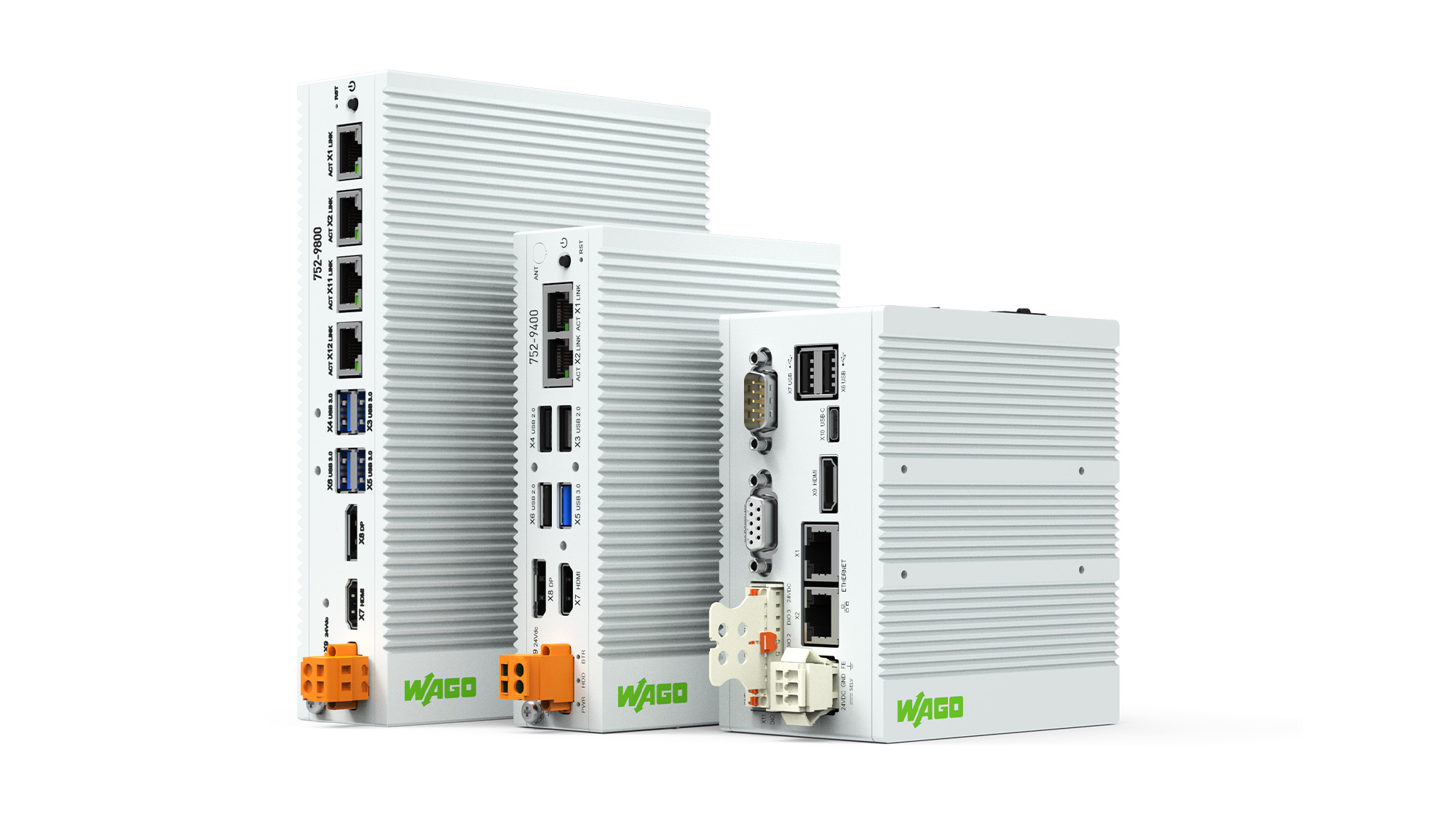
WAGO Compact Controller (Item Number 751-9402)

PFC200 (Item Number 750-821x)

WAGO Edge Controller

MM-20830_3d_gruppenbild_edge_controller_and_computer_2_2000x1125_.jpg

WAGO Touch Panel 600

An Aesthetic Design Meets High Performance
MM-3896_Touch_Panel_2000x2000.jpg

Your Path with WAGO to a Grid-Compliant
Plant Connection and Operation

WAGO gives you the freedom to choose which path you take toward a grid‑compliant generating plant connection and operation using a certified generating plant controller. Either we support you in selecting and configuring the required components, or you can rely on our network of system integrators and commission the implementation service directly.

Implementing Power Plant Controllers Yourself

Our Sales department will support you in selecting hardware to implement grid-compliant plant connection and operation yourself. You can also get further support, e.g. with the necessary e!COCKPIT programming knowledge, from our free customer support and our telecontrol technology and programming training program.

Order Power Plant Controllers

If you have neither the time nor the know-how to connect your plant to the grid correctly, then hire a WAGO Solution Provider (WSP) as a kind of all-inclusive package. They will provide the complete solution – from procuring the appropriate components, to implementing and commissioning, to documentation.

Configurator: Request a Customized Control Cabinet for Remote Control and Protection Technology

Are you already further along in the detailed planning for connecting a generating plant? Then configure your grid connection solution to meet your specific requirements. Use our inquiry form to design a control cabinet for your remote control and protection technology. Simply fill it out, submit it, and we will then send you a personalized offer directly by email. If you have any questions, our energy team will be happy to assist you personally.

Power Plant Control_2000x1125_icon_04.jpg

Products

WAGO Power Plant Control

All information about the WAGO Power Plant Control library is available for download as a compact file, including a 30-day test access.

kundenservice_downloads_gettyimages-78767355_2000x1125.jpg

Modular Software

Our open automation platforms, on which preferred software tools and programming languages can be used, offer flexibility and independence.

to-the-code-of-your-choice_2000x1125.jpg

I/O Modules

Discover the benefits of our flexible remote I/O Systems. Appropriate I/O modules are available for nearly all applications and environmental conditions.

Gruppenbild_automation_io-systeme_2020_03_2000x2000.jpg

FAQ – Frequently Asked Questions

“WAGO Power Plant Control” is a library with a control algorithm for active and/or reactive power certified per VDE-AR-N 4110/4120. It can be used on the second-generation PFC200 Controller. This controller has two ETHERNET ports, which can be used as switches, or separately over two isolated networks. This makes it possible to communicate directly from the controller with the grid operator and direct marketer, through a VPN tunnel with secure end-to-end encryption – for example, via standard protocols like IEC 60870 -104/101 and Modbus® or ripple control receivers, etc. This allows transfer of the active power, the reactive power or the power factor cos phi, among other things. The overall system allows customers to implement tailored power plant controllers.

All information, datasheets, the manual, the simulation model, certificates and a 30-day trial version are available for download as a compact file.
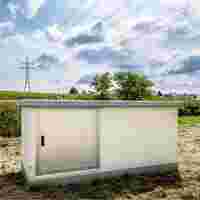
A power plant controller is an essential component of a power plant; more specifically, it is a component in the grid connection point (GCP) where relevant information is exchanged between the plant and the grid operator.

The power plant controller forms the interface between the plant and the power supplier, the grid operator the direct marketer, in order to allow the control power to be sold on the exchange, for example. In the process, it regulates the setpoint values for active and/or reactive power at the grid connection point (GCP). It compares these setpoints to the measured actual values at the GCP and communicates the calculated control variable to the generating systems. With the help of the power plant controller, the grid operator can control the plant feed-in via specified characteristics on the generator side. A good way to picture it is as the grid operator’s “accelerator and brake pedals” for power plants, since generation and consumption must be in harmony at all times.

Many grid operators also require an interface of the so-called intelligent customer station with the energy supplier. This allows actual values and errors to be monitored at all times on the customer station. The grid operator has switching power within its area of authority, so it can reestablish the power supply within seconds. The grid information this makes available helps grid managers achieve better utilization.

The percentage of renewable energy in the power grid is increasing, and we want this increase to continue – but without endangering the stability of the grid. For this reason, the technical connection rules (TCRs) for decentralized power plants have been made tightened. A central element of this is a power plant controller, which must have a corresponding component certificate, or else it cannot be put into operation and connected to the grid. However, only companies certified per ISO 9001 can get this component certificate.

No, each plant is different. However, a flexible concept can help plant planners and operators and system integrators save a great deal of time and effort. Therefore, a great variety of projects can be realized with the Linux®-based controllers and the modular WAGO I/O System – for instance, from the building, energy and e-mobility industries – regardless of the prevailing plant configuration. The control solution also allows battery storage systems and loads to be connected and controlled directly. And the second-generation PFC200 understands much more than just the more common protocols on the market.

The VDE-AR-N 4110 Technical Connection Rules for Medium Voltage are rules of use that form the technical basis for grid connection and plant operation on the medium-voltage level, into which a large number of power plants feed power. They were developed jointly with VDE FNN, the Network Technology/Network Operation Forum, a committee of the Association for Electrical, Electronic and Information Technologies (VDE). Their purpose it to allow grid operators to continue to be able to ensure grid stability as the share of renewable energies grows. For power plants that will feed into the medium-voltage grid in the future, the Technical Connection Rules for Medium Voltage mandate a so-called component certificate for the required power plant controller.

Since April 27, 2019, the Medium Voltage Directive has been mandatory for all systems that are commissioned and generate an output of 135 kW or greater in the voltage range 1 to 60 kV.

This applies to the following:

  • Combined heat and power cogeneration plants
  • Biogas plants*
  • Photovoltaic systems
  • Wind power stations
  • Geothermal plants
  • Hydroelectric power plants
  • Storage systems
  • Mixed systems

* As part of increasing flexibility, many of these plants are being expanded to double to triple generator power and delivery rate. When such plants are expanded with total output at the grid connection point (GCP) of 135 kW or greater, they must follow the new usage guidelines.

Additional service offerings: