[{"term":"Libraries_BA","id":0,"type":"QUICKLINKS"},{"term":"Instructions","id":1,"type":"QUICKLINKS"},{"term":"WAGO-I/O-PRO","id":2,"type":"QUICKLINKS"},{"term":"Building","id":3,"type":"QUICKLINKS"},{"term":"221","id":4,"type":"QUICKLINKS"}]
{ "@context": "https://schema.org", "@type": "BreadcrumbList", "itemListElement": [ { "@type": "ListItem", "position": 1, "name": "Homepage", "item": "https://www.wago.com/in" }, { "@type": "ListItem", "position": 2, "name": "Solutions", "item": "https://www.wago.com/in/solutions" }, { "@type": "ListItem", "position": 3, "name": "Power Engineering ", "item": "https://www.wago.com/in/power-engineering" }, { "@type": "ListItem", "position": 4, "name": "Renewable Energy Generation", "item": "https://www.wago.com/in/power-engineering/renewable-energy-generation" }, { "@type": "ListItem", "position": 5, "name": "Bat Conservation at Wind Farms", "item": "https://www.wago.com/in/power-engineering/renewable-energy-generation/customer-application-bat-crossing" } ] } [{"url":"/solutions","name":"Solutions","linkClass":null,"categoryCode":null},{"url":"/power-engineering","name":"Power Engineering ","linkClass":null,"categoryCode":null},{"url":"/power-engineering/renewable-energy-generation","name":"Renewable Energy Generation","linkClass":null,"categoryCode":null},{"url":"/power-engineering/renewable-energy-generation/customer-application-bat-crossing","name":"Bat Conservation at Wind Farms","linkClass":"active","categoryCode":null}]
Customer application

Caution! Bat Crossing
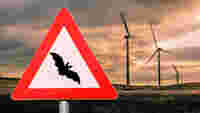
The goals of a wind power operator are to optimize switch-off times and increase yield. Where winged animals rule the skies, it has been necessary to reckon with costly downtimes – but Senvion is showing how to change that. With the help of WAGO, the wind turbine manufacturer offers operators the possibility of reacting even more flexibly to changes, for example: bat conservation.

Date information, wind speeds, temperatures: What functions as the basis for the weather forecast is really a kind of flight plan – for bats. “All this information is required in order to be able to make reliable statements about the activities of bats,” explains WAGO engineer Nino Flottmann. But for what purpose? The short answer: animal protection.

The Forest Becomes a Wind Power Zone

The background is that, from a purely legal point of view, forests have also become a substantial zone for wind energy. This was unthinkable at the start of the era of wind power, simply for nature conservation reasons and due to technical hurdles. However, the targets of energy and climate policy need to be met. That’s why only five percent of the about 26,000 wind turbines in Germany are located in forests – but there is an upward trend.

However, these wind turbines must share the space with the forest dwellers. In the turbines, which currently stand up to 200 meters high, the nacelles extend far above the forest canopy, and the ends of the enormous rotor blades move far above the treetops. However, they reach so far down that they cross the airspace of bats, since most of the 25 native species prefer trees as their habitat.