Customer Application

Using Urea Against Nitrogen Oxides

  • 1/21/2019
  • Diesel engines are currently at the center of environmental debates – not only in the auto industry, but also in maritime shipping. This is because ocean-going vessels can generate substantial amounts of environmentally damaging pollutants. The nitrogen oxides (NOx) created specifically during the combustion of diesel fuels are considered hazardous to human health, as they can damage the respiratory tract and the cardiovascular system. Göteborgs Energy Systems AB (GESAB) manufactures systems with Selective Catalytic Reduction (SCR) for use in diesel engines in larger ships. As a result, nitrogen oxide emissions are substantially reduced.

    The global shipping industry is under a lot of pressure to reduce exhaust gas emissions due to stricter regulatory guidelines and rules. Consider two examples from Scandinavia: In Sweden, all ships pay an emissions levy upon entering a new harbor; in Norway, a tax is levied per kilogram of nitrogen oxide emitted by each ship. One effective strategy for shipping companies needing to reduce NOx emissions while saving money through lower taxes and fees is based on SCR technology. “Selective Catalytic Reduction” technology initiates a chemical reaction that converts damaging nitrogen oxides in the exhaust gases into nitrogen (N2) and water (H2O).

    SCR technology makes shipping a bit cleaner.

    • As a part of the exhaust gas system, the SCR systems are located on the ship directly downstream from diesel engines in the exhaust gas system. The urea is stored in a separate tank and is guided to the metering device in the exhaust gas system via conduits.
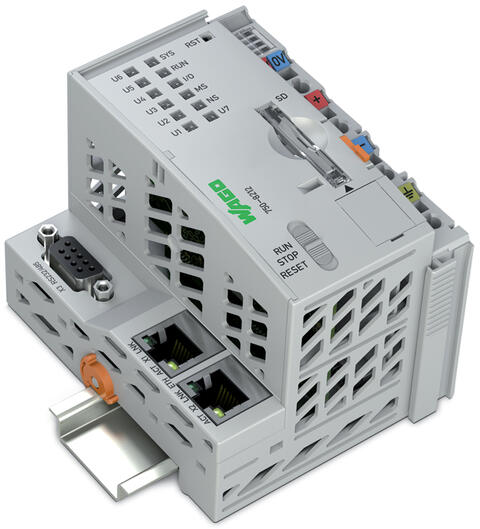


    Controller PFC200; 2 x ETHERNET, RS-232/-485
    Item no. 750-8202

    Controller PFC200; 2 x ETHERNET, RS-232/-485

    Controller PFC200; 2nd Generation; 2 x ETHERNET, RS-232/-485
    Item no. 750-8212

    Controller PFC200; 2nd Generation; 2 x ETHERNET, RS-232/-485

    Controller PFC200; 2nd Generation; 2 x ETHERNET, RS-232/-485, CAN, CANopen, PROFIBUS Slave
    Item no. 750-8216

    Controller PFC200; 2nd Generation; 2 x ETHERNET, RS-232/-485, CAN, CANopen, PROFIBUS Slave

    Controller PFC200; 2nd Generation; 2 x ETHERNET, RS-232/-485, CAN, CANopen
    Item no. 750-8214

    Controller PFC200; 2nd Generation; 2 x ETHERNET, RS-232/-485, CAN, CANopen

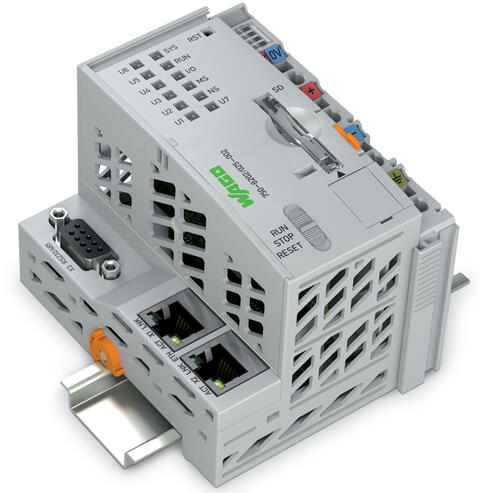
    Controller PFC200; 2nd Generation; 2 x ETHERNET, RS-232/-485; Ext. Temperature
    Item no. 750-8212/025-000

    Controller PFC200; 2nd Generation; 2 x ETHERNET, RS-232/-485; Ext. Temperature

    Controller PFC200; 2nd Generation; 2 x ETHERNET, RS-232/-485, CAN, CANopen, PROFIBUS Slave; Telecontrol technology; Ext. Temperature
    Item no. 750-8216/025-001

    Controller PFC200; 2nd Generation; 2 x ETHERNET, RS-232/-485, CAN, CANopen, PROFIBUS Slave; Telecontrol technology; Ext. Temperature

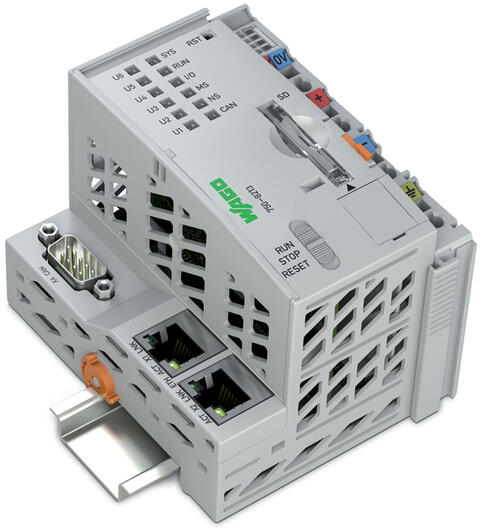
    Controller PFC200; 2nd Generation; 2 x ETHERNET, CAN, CANopen
    Item no. 750-8213

    Controller PFC200; 2nd Generation; 2 x ETHERNET, CAN, CANopen

    Controller PFC200; 2nd Generation; 2 x ETHERNET, RS-232/-485; Telecontrol technology; Ext. Temperature; ECO
    Item no. 750-8212/025-002

    Controller PFC200; 2nd Generation; 2 x ETHERNET, RS-232/-485; Telecontrol technology; Ext. Temperature; ECO

    Controller PFC200; 2 x ETHERNET, RS-232/-485; Telecontrol technology; Ext. Temperature; ECO
    Item no. 750-8202/025-002

    Controller PFC200; 2 x ETHERNET, RS-232/-485; Telecontrol technology; Ext. Temperature; ECO

    Cleansing Effects of Urea

    GESAB, headquartered in Göteborg, has built these types of nitrogen oxide reducing systems for the shipping industry for more than 30 years. Johan Svenberg, Business Unit Manager at GESAB, explains that, “By using an SCR system and a specific, yet relatively simple method, up to 95% of the nitrogen oxides can be removed from the exhaust gases.” An additional clean side effect: the engine can be be adjusted to run at low particulate levels. The amount of soot in the exhaust gas flow can also be reduced. In the method used by GESAB, a reducing agent is added to the exhaust gases which mixes with the NOx. A metering module is used to inject a reducing agent, a non-toxic and odorless solution consisting of highly concentrated urea in de-ionized water, into the exhaust gas system. A catalyst converts the nitrogen oxides contained in the exhaust gases into harmless nitrogen and simple water; the chemical reaction requires only a few seconds to be completed. As a part of the exhaust gas system, the SCR systems are located on the ship directly downstream from diesel engines in the exhaust gas system. The urea is stored in a separate tank and is guided to the metering device in the exhaust gas system via conduits.
    PFC200 for Optimal Control

    The amount of urea solution supplied to the exhaust gases in an SCR system depends on the engine load – the higher the output, the more agent is required. “An electronic controller forms the core of the method. It uses important engine parameters, like operating temperature or speed, to precisely determine the amount of urea,” explains Svenberg. This is because the optimal effect can only be achieved and the high cleaning rate for nitrogen oxide emissions can only be ensured if the exhaust gas and urea amounts are precisely matched. Therefore, GESAB relies on the WAGO PFC200 Controller, which has both a powerful processor and supports numerous ETHERNET protocols. Adding increased value to the WAGO controller: It is possible to establish connections to higher-level IT systems. Users can access a visualization, which runs on a web server that is directly integrated in the PFC200, via conventional web browser. Signals are connected to one another using the modular, robust and compact WAGO-I/O-SYSTEM 750. “We have been collaborating with WAGO for more than five years, and are completely satisfied with their products,” according to Svenberg. In addition to maritime certifications, by DNV GL among others, the electromagnetic compatibility, resistance to interference, security against faults, and fieldbus-independent interfaces weighted the scales in favor of an automation system. “Due to WAGO’s wide assortment of products, we can concentrate on a single supplier, which is an important part of our environmental program at GESAB,” emphasizes Svenberg. WAGO is a reliable partner, who ensures reliable connections for critical interfaces.

    Text:
    Kajsa Ihre
    Johan Lycke | WAGO

    Photo: GESAB

    We have been collaborating with WAGO for more than five years, and are completely satisfied with their products.

    WDE_1802_Cat_2000x1500.jpg

    What makes nitrogen oxides so dangerous?

    Heath risks
    Nitrogen dioxide concentrations occurring in the environment pose a particular danger to asthmatics, because the compounds can cause bronchial constrictions that are intensified by allergens, among other things.

    Effects on ecosystems
    Nitrogen oxides, especially nitrogen dioxide, can damage plants, causing the leaves to turn yellow (necrosis), and also causing premature aging and stunted growth. In addition, nitrogen dioxide bonds with water to form acid rain, which contributes to over-fertilization and the acidification of soils and bodies of water.

    Further Customer Applications from the Area of Propulsion Control

    WAGO has completed many interesting projects in the marine and offshore sectors. Learn more about the most recent ones here.

    Marine_Offshore_WDE_1802_lav1_2000x1500.jpg

    Zero Emissions, Doubly Safeguarded

    Supported by the Arctic University of Norway in Narvik (UiT) and funded by the Norwegian government, the shipbuilders at Grovfjord Mekaniske Verksted (GMV) have developed an energy management system (EMS) for a zero-emission ship with an all-electric drive. This visionary project was realized with the help of WAGO, which contributed to the central automation.

    marine_schiff_capri_luxusyacht_2000x1500.jpg

    Safe Exhaust Gas Cleaning for Ships

    Retrofittable exhaust gas post-treatment systems allow ships to meet the exhaust gas standards – with WAGO technology.

    Your contact person at WAGO

    Vertrieb_kontaktmodul_kundenservice_vertrieb_mann_gettyimages_482100240_400x346

    WAGO Singapore