Single-Battery Systems
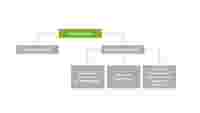
For single-battery systems, each safety light is decentralized and has its own battery. The advantage here is that no additional special cables must be laid for installation, lowering construction costs. This results in higher costs during operation. Because: On average, the life of the batteries is exhausted after four years. Depending on a building’s size and the number of safety lights, battery replacement can be a lot of work– especially since the lights are not always accessible and technical support is sometimes needed. In addition, regular statutory audits need to be ensured either manually or through wireless safety lights, for example. For smaller and listed buildings, where major changes to the building structure should be avoided, single-battery systems are often an adequate solution.
Central Battery Systems with Power Limitation
Low-power systems (LPS), often referred to as power-limited battery supplies, are a semi-decentralized alternative. An LPS does not supply a whole building with battery power, but only a certain building area. As a rule, several low-power systems are needed in one object. The connected load is 1,500 watts for one hour or 500 watts for three hours. The advantage of this solution is that no fireproof cables need to be laid throughout the building beyond the area to be supplied, allowing buildings to be gradually renovated and put into operation. In addition, no separate space is required for the LPS batteries.
Central Battery Systems without Power Limitation
As with LPS, the battery life of central power systems (CPS) is at least ten years on average. After a more complex installation, special cables to the luminaires have to be laid from a central room in the building; however, the ongoing operation is particularly economical. Unlike safety lights for single-battery systems, those for centralized and semi-decentralized solutions are much more compact. For buildings with a high design standard, this aspect can also be decisive. In addition, individual lighting settings can be made, for example via DALI.
Testing and Maintenance – Automated or Manual
Whether a single- or central battery system, the best emergency lighting is worthless if it does not work properly in an emergency. In order to ensure long-term reliability after initial installation, the various standards and guidelines call for routine testing and maintenance that's quite extensive. The effort can be quite considerable. The time intervals for such tests vary according to the maintenance and testing that must be performed. They range from the viewing of the status LED for each luminaire daily to switching to emergency mode monthly and the annual check of the battery charger.
Automatic test systems can lend a tremendous amount of assitance for this work. If such a test system must be additionally installed wireless or wired for single-battery light systems, the implementation with central battery systems (LPS and CPS) is much easier. With them, the status of the entire system can be viewed from a central location. Tests are regularly performed and documented after prior programming. If there is an error, the technician will be informed with a detailed error description and exact position information – via message on screen, e-mail or text message.