[{"term":"Libraries_BA","id":0,"type":"QUICKLINKS"},{"term":"Instructions","id":1,"type":"QUICKLINKS"},{"term":"WAGO-I/O-PRO","id":2,"type":"QUICKLINKS"},{"term":"Building","id":3,"type":"QUICKLINKS"},{"term":"221","id":4,"type":"QUICKLINKS"}]
[{"url":"/referenz-bahntechnik-widrigste-bedingungen","name":"1.1.railway_Transport_Railway_Crane_Kirow","linkClass":"active","categoryCode":null}]
Customer application 31 March 2021

Railway Systems for the Most Demanding Conditions

Once the railroad cranes and slag pot carriers leave Kirow’s production facility in Leipzig, Germany, they often have to endure at least 20 years of service in the most demanding conditions. Outdoor temperatures between −20 and +40 °C, hot slag material at temperatures of up to 1,200 °C, severe shocks and increased electrical voltages are just some of the demands placed on the technology and electronics. WAGO’s spring pressure connection technology and I/O controllers have also had to prove they can handle such environments.
Kirow is the world market leader for railway cranes, and its heavy-duty model, the Multi Tasker, can be found in the depots of many railway companies. It is used wherever damaged vehicles will be recovered from the rail network and loads of up to 200 t have to be moved. The Tracklayer, a specialty lifting and transportation machine that accompanies the Multi Tasker, is used for laying very long and heavy track and replacing switch points. Due to the severe wear that results from use with high-speed trains, switches have to be replaced regularly. The individual parts of a rail’s switch point used to be transported to the site, where they were assembled and fitted to the tracks. The heavy switch segments, which weigh up to 18 t, are now supplied by the manufacturer as completely pre-assembled components and then brought to the replacement site. As the switches are too bulky for normal rail transport, since they can be up to 4.4 m wide, they are loaded onto Kirow’s special switch transport cars, tilted 60 degrees, fastened securely and then transported to the site – often over long distances.
Why WAGO?

  • Rugged Electronics for Harsh Environments

  • Increasing Demands on the Technology

  • Compatibility and Long-Term Availability

Rugged Electronics for Harsh Environments

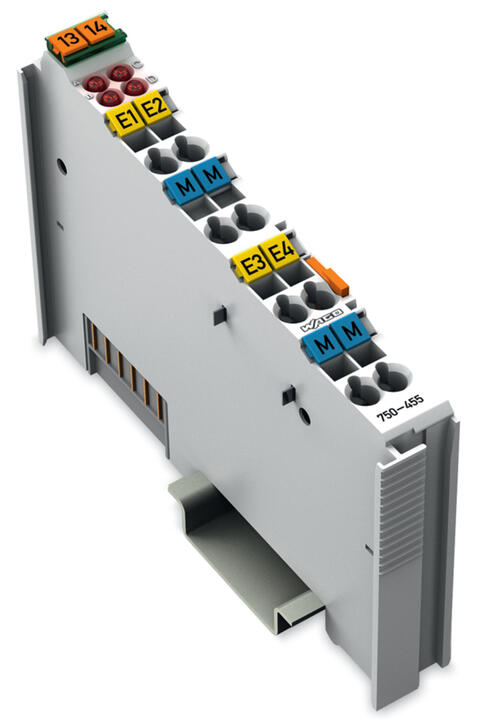
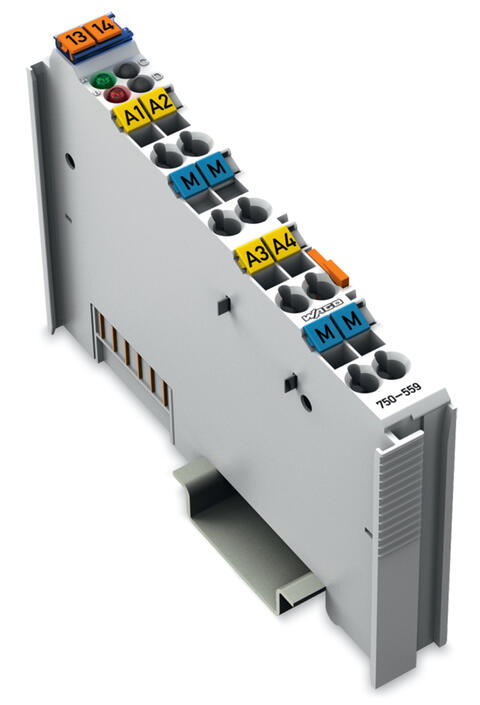
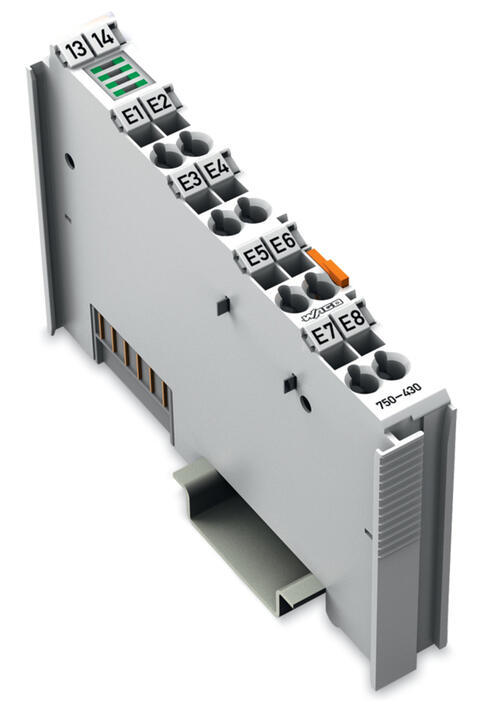
Kirow’s railway cranes and slag pot carriers are operated by sophisticated control technology. A host of sensors monitor the current operating status and numerous actuators to ensure reliable control. The signals are routed through an I/O system that supports several essential functions, such as the use of inductive sensors to monitor the position of additional stabilizing supports for cranes. If the supports are located at the required distance, then a digital output module in the system activates a control light. Other sensors check whether the tilt compensation mechanism is correctly locked during transport and unlocked during operation.

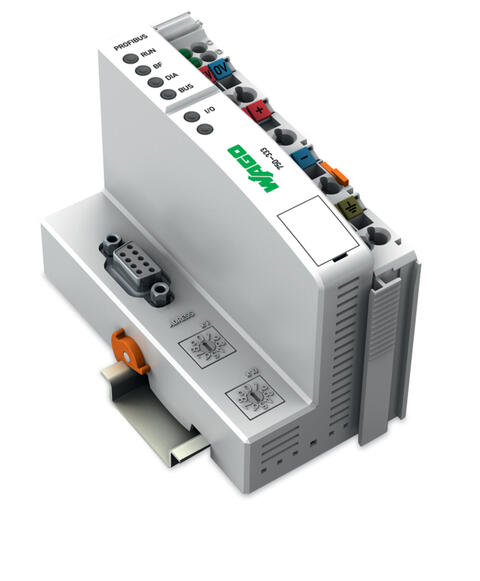
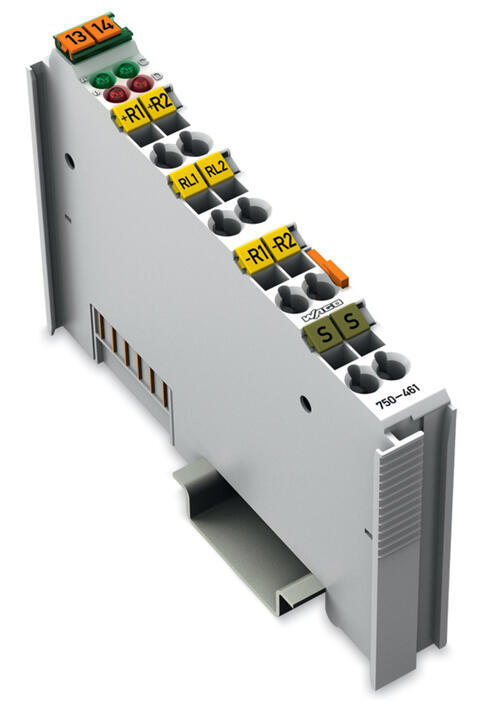
“We were looking for an I/O system that had already been tried and tested in harsh railway environments. Compared to other manufacturers, WAGO’s reliable spring pressure connection technology and robust CANopen technology stood out,” reports Arnfried Wagner, the engineer responsible for control technology at Kirow. Kirow uses the WAGO-I/O-SYSTEM 750. The Minden-based manufacturer was able to certify the durability of its technology for the special requirements of the railway industry per EN 50155 (railway standard) and EN 50121/3/2 (EMC performance). WAGO’s spring pressure connection technology and electronics have been tested for resistance to impacts and shock; they also have the certifications that verify resistance to extreme weather, interference and vibrations, as well as dielectric strength.

According to Wagner, other benefits of WAGO technology include a modular design and a compact footprint. The space-saving I/O nodes can be positioned wherever sensors and actuators are needed and do not require expensive cabling to a central controller. Due to the short distances involved, Kirow uses cables with small cross-sections that are less susceptible to electromagnetic interference. Thanks to the large number of analog and digital inputs and outputs available, the WAGO-I/O-SYSTEM is the perfect complement to Kirow’s own control technology. This is why additional functions, such as the movement of the support arms, will also be controlled by the WAGO-I/O-SYSTEM’s output modules in the future.