[{"term":"Libraries_BA","id":0,"type":"QUICKLINKS"},{"term":"Instructions","id":1,"type":"QUICKLINKS"},{"term":"WAGO-I/O-PRO","id":2,"type":"QUICKLINKS"},{"term":"Building","id":3,"type":"QUICKLINKS"},{"term":"221","id":4,"type":"QUICKLINKS"}]
{ "@context": "https://schema.org", "@type": "BreadcrumbList", "itemListElement": [ { "@type": "ListItem", "position": 1, "name": "Homepage", "item": "https://www.wago.com/in" }, { "@type": "ListItem", "position": 2, "name": "Customer Application: Swiss Shrimp", "item": "https://www.wago.com/in/customer-application-swiss-shrimp" } ] } [{"url":"/customer-application-swiss-shrimp","name":"Customer Application: Swiss Shrimp","linkClass":"active","categoryCode":null}]
Customer application

Smart Light Control for Light like in the Gulf of Mexico

The SwissShrimp AG in Rheinfelden was the first Swiss company dedicated to sustainable prawn farming. Because the lighting is crucial, this startup relies on lighting controllers from WAGO.

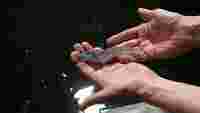
Let the raw shrimp marinate for half an hour in a mixture lime juice, chili and cilantro, and then serve them cold – that’s Markus Thon’s favorite recipe for this delicacy. However, it takes quite a bit of time before the production manager of SwissShrimp AG can enjoy his ceviche. Delivered during the post-larval stage at a scant three to four millimeters in size, the shrimp require at least six months to mature until they are as big around as a man’s thumb and as long as a pen. Only then are they ready for the Central American dish. In order for the animals to remain healthy, they require plant-based food, which is produced in Europe, and the correct lighting. These fast swimmers don’t like sudden changes in light at all – they give them such high stress levels that they can die of heart failure, in which case they end up as food for more stress-resistant members of their colony.
{"container":false,"catalogVersion":"in-wagoContentCatalog/Online","lastExportedVersion":1,"type":"Quote Component","dynamicVisibility":true,"cloneable":true,"uuid":"eyJpdGVtSWQiOiJjb21wXzAwMDA5UURFIiwiY2F0YWxvZ0lkIjoiaW4td2Fnb0NvbnRlbnRDYXRhbG9nIiwiY2F0YWxvZ1ZlcnNpb24iOiJPbmxpbmUifQ==","ignoreOnTransfer":false,"uid":"comp_00009QDE","quote":"The animals should grow up in the environment they are familiar with.","modifiedtime":"2025-12-12T02:50:24+0000","children":[],"onlyOneRestrictionMustApply":true,"lastLoad":1765507824838,"visible":true,"wagoColumnComponent":[],"imagePosition":"LEFT","availableLanguages":"AVAILABLE","passepartout":true,"restrictions":[],"searchable":true,"lead":"<p>Rafael Waber, CEO of SwissShrimp AG</p><p></p>","typeCode":"WagoQuoteTeaserComponent","slots":["eyJpdGVtSWQiOiJjc18wMDAwOTRRUyIsImNhdGFsb2dJZCI6ImluLXdhZ29Db250ZW50Q2F0YWxvZyIsImNhdGFsb2dWZXJzaW9uIjoiT25saW5lIn0="],"itemtype":"WagoQuoteTeaserComponent","restricted":false,"name":"Quote-Shrimp","synchronizationBlocked":true,"containers":[],"creationtime":"2021-10-14T11:27:02+0000","actions":[],"contentVersion":1,"parents":[]}

Simulating the Natural Habitat with an Intelligent Lighting Concept

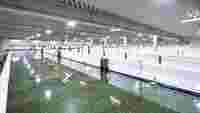
Out in the wild, prawns can spend time among mangrove roots and algae, for example. However, these features would impair the water treatment system’s function – once per hour, it completely processes the contents of the large plastic ponds, at 40 by 5 meters, and cleans the excretions of the approximately 80,000 inhabitants from the 100 cubic meters of water. Additional organic waste would require a more complex system. So, how can the natural habitat of saltwater organisms be recreated without stretching the water treatment equipment to its limits? SwissShrimp found an interesting approach: By using 210 DALI lights, they could simulate the lighting conditions in the Gulf of Mexico in two windowless halls. Additional structures to increase surface area, like plastic tubes lowered into the ponds, create places for the organisms to retreat to, without the contaminants that mangroves or algae would bring.

MM-19882_190110_016_SvG-Pano_h_2000x1125.jpg