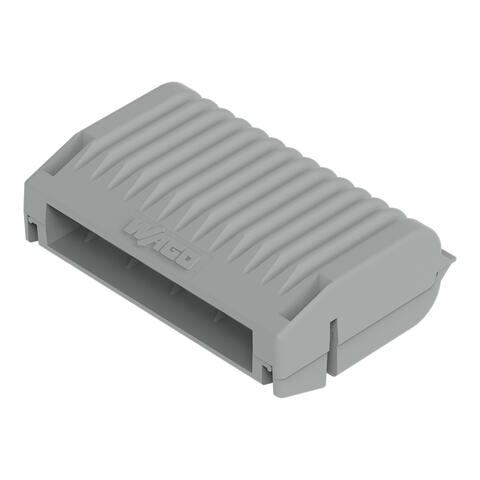
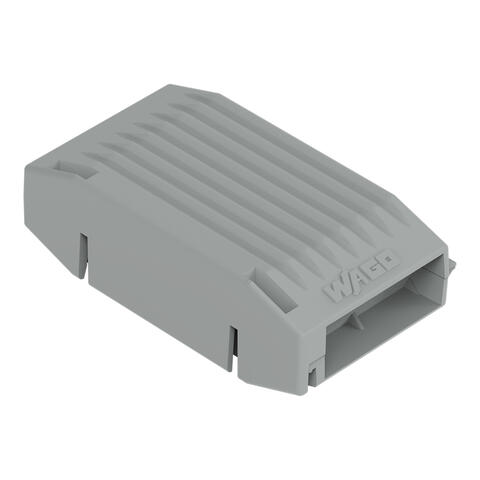
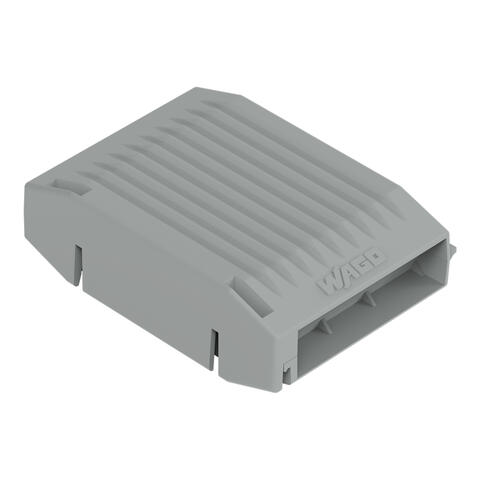
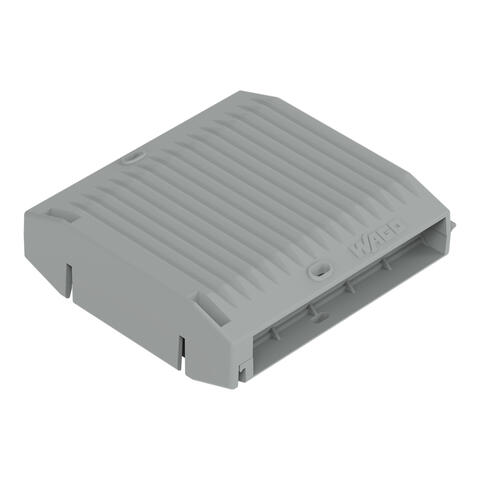
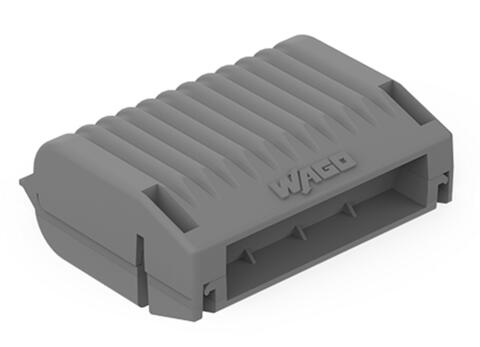
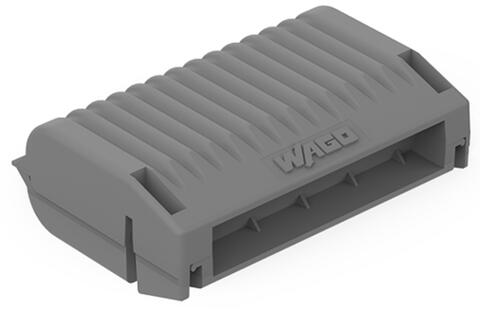
WAGO Gelbox

Protect Connectors from Moisture

Condensation, heavy precipitation, powerful water jets:

When moisture meets electricity, a short circuit can happen quickly. Encapsulation is a proven solution. But now reliable moisture protection for splicing connectors can be achieved even more quickly and easily with the WAGO Gelbox. It is ready for immediate use in a wide range of low- and extra-low voltage applications.
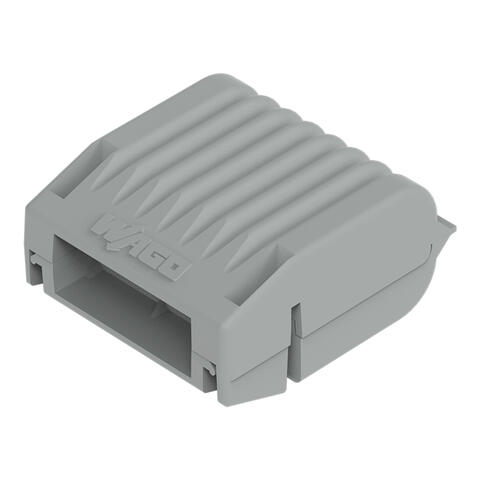
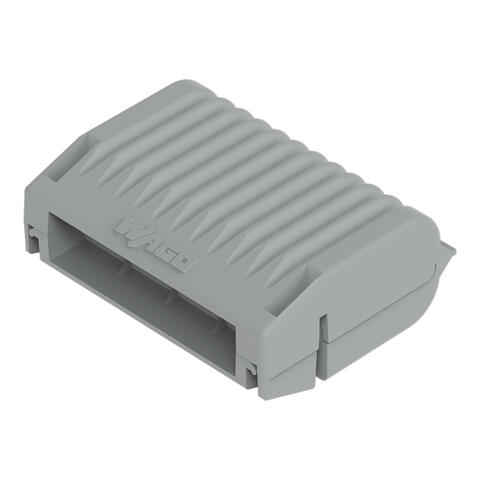
The Benefits for You:

  • Easy, fast and safe to use

  • Can be used immediately and accessed again later

  • Silicone-free

  • Label-free

  • Suitable for indefinite storage

  • The complete system consisting of Gelboxes and WAGO connectors are IPX8-certifed


View Products

Gelbox; Branch; for cables; with gel; 221, 2x73 Series; max. 4 mm² connectors; without splicing connectors; Size 1; gray
Item no. 207-1331

Gelbox; Branch; for cables; with gel; 221, 2x73 Series; max. 4 mm² connectors; without splicing connectors; Size 1; gray

Gelbox; Branch; for cables; with gel; 221, 2x73 Series; max. 4 mm² connectors; without splicing connectors; Size 2; gray
Item no. 207-1332

Gelbox; Branch; for cables; with gel; 221, 2x73 Series; max. 4 mm² connectors; without splicing connectors; Size 2; gray

Gelbox; Branch; for cables; with gel; 221, 2x73 Series; max. 4 mm² connectors; without splicing connectors; Size 3; gray
Item no. 207-1333

Gelbox; Branch; for cables; with gel; 221, 2x73 Series; max. 4 mm² connectors; without splicing connectors; Size 3; gray

Gelbox; inline connection; for cables; with gel; 221 Series; max. 4 mm² connectors; without splicing connectors; Size 1; gray
Item no. 207-1372

Gelbox; inline connection; for cables; with gel; 221 Series; max. 4 mm² connectors; without splicing connectors; Size 1; gray

Gelbox; inline connection; for cables; with gel; 221 Series; max. 4 mm² connectors; without splicing connectors; Size 2; gray
Item no. 207-1373

Gelbox; inline connection; for cables; with gel; 221 Series; max. 4 mm² connectors; without splicing connectors; Size 2; gray

Gelbox; Through connection; for core lines; with gel; 221 series, max. 4mm² terminals; without connection clamps; size 3; Gray
Item no. 207-1375

Gelbox; Through connection; for core lines; with gel; 221 series, max. 4mm² terminals; without connection clamps; size 3; Gray

Gelbox; Branch; for cables; with gel; 221 Series; max. 6 mm² connectors; without splicing connectors; Size 1; gray
Item no. 207-1431

Gelbox; Branch; for cables; with gel; 221 Series; max. 6 mm² connectors; without splicing connectors; Size 1; gray

Gelbox; Branch; for cables; with gel; 221 Series; max. 6 mm² connectors; without splicing connectors; Size 2; gray
Item no. 207-1432

Gelbox; Branch; for cables; with gel; 221 Series; max. 6 mm² connectors; without splicing connectors; Size 2; gray

Gelbox; Branch; for cables; with gel; 221 Series; max. 6 mm² connectors; without splicing connectors; Size 3; gray
Item no. 207-1433

Gelbox; Branch; for cables; with gel; 221 Series; max. 6 mm² connectors; without splicing connectors; Size 3; gray

What is the WAGO Gelbox?

The WAGO Gelbox is a compact box pre-filled with silicone-free gel. The Gelbox is available in six sizes and provides IPX8 levels of moisture protection for WAGO’s 221 Series Lever-Nuts® Compact Splicing Connectors and 2773 Series COMPACT PUSH WIRE® Connectors. This protection type means that the connectors are completely sealed against water and can be permanently immersed in water. Conventional potting compounds like polyurethane and silicone also meet IPX8 requirements. However, the WAGO Gelbox’s distinctive feature is that it protects the electrical installation exactly where it matters – at the connection points – without permanently encapsulating the junction boxes. Unlike silicone-based gel, the WAGO Gelbox’s silicone-free gel supports a virtually unlimited number of applications.

Where Can the Gelbox Be Used?

The WAGO Gelbox can be used in a wide range of low- and extra-low-voltage applications. However, its use differs somewhat among the specific voltage ranges. For example, in low-voltage applications (e.g., 230 V), the Gelboxes are used in junction boxes together with splicing connectors. This is the only way to ensure double cable insulation to protect against electric shock, since only the conductors are encapsulated in the WAGO Gelbox. In SELV (Safety Extra Low Voltage) applications, the WAGO connectors can be used with Gelboxes without an additional junction box.

Application Examples

  • Bathroom installation

  • Washing facilities/irrigation systems

  • Parking and garden centers

  • Swimming pool areas

  • Charging station and light systems in ports


Gelbox Application Image.png

How is the WAGO Gelbox used?

Installation is easy: Open the box, insert the connectors, close the box. In more detail: Open the WAGO Gelbox, place the wired splicing connectors in the box and close the box with slight pressure. The gel completely wraps itself around the installation.

Thanks to a compact design, WAGO Gelboxes can be easily accommodated in every junction box. Thanks to different housing styles, several connectors can be accommodated in one WAGO Gelbox to create additional space in the distribution box. If a circuit needs to be expanded, the boxes can be easily re-opened and quickly and reliably re-wired – a real advantage over standard electronics encapsulation. The wires that connected in the old installation can be reused for the new one. However, this requires new connectors and Gelboxes – this is the only way WAGO can guarantee the high degree of protection.

Gelbox Application Image Two.png

Why use the WAGO Gelbox?

The WAGO Gelbox offers completely new possibilities for protecting splicing connectors from moisture. This means that the boxes can be easily accommodated in any junction box – regardless of whether they are mounted on the wall or under the ceiling. First of all, the time required for mixing the components is eliminated. Secondly, additional time is saved because you do not have to wait until the mixed potting compound has finally hardened or dried. In addition, the gel is non-hazardous because its chemicals have already reacted, which makes the WAGO Gelbox ready for immediate use. The box is already prefilled with gel and seals the connection immediately, allowing electrical systems to be deployed right after installation without interruption – quickly, easily and reliably.

Cellpack-Quality Gel – Silicone- and Label-Free

WAGO relies on the proven quality of Cellpack-brand gel. This well-known potting compound manufacturer co-developed the Gelbox with WAGO. The Cellpack gel used offers three main advantages over conventional encapsulation. Chief among them: The gel is silicone-free. This allows the Gelbox to be used in any branch of industry – even those where varnishes, paints and other sensitive products are used, such as the automotive industry. Secondly, the silicone-free gel has already reacted, so it is fully label-free and can be stored indefinitely. This cannot be said of all components used to manufacture potting compounds. In addition, the silicone-free gel potting compound uniquely allows a user to re-access the connection – the keyword here: re-accessibility.

Risk of Short Circuit.png

Risk of short circuit: What causes moisture to form?

How do moisture and humidity form in a junction box? Condensation can arise from rapid temperature changes, for example. This is often the case during transitional periods, such as spring and autumn, when the warm air inside the housing meets the cold housing wall of the connector chamber and it cools down abruptly. The result: condensation on the housing’s inner wall. This physical effect is further magnified by power loss, which increases heat compared to the outside temperature.

These temperature differences also lead to pressure differences, which allow fresh air to flow into the connector over and over, introducing moisture. In total, a considerable amount of water can accumulate within the connector. But heavy rainfall or a strong water jet too close to a distribution box can also cause moisture in junction boxes. “The moisture within the connector can then cause the current to take completely new paths, quickly leading to a short circuit.” However, this is often only noticed when protective devices are triggered, i.e., when the fuses blow.

FAQ