Customer application

Heating with Ice

Heat pumps for heating or cooling buildings usually draw their energy from geothermal probes or ground collectors. The building technology company leitec® took a different path: an ice energy storage system provides the necessary energy. WAGO technology controls the interplay among the systems, plus all the building automation.

Energy is created when water freezes to form ice. The same amount is required to heat water from zero to 80 degrees Celsius (32 to 176 °F). Viessmann, a heating technology company, used this crystallization principle for their innovation and developed a system based on ice energy storage and heat pumps to provide energy for heating and cooling.

Users of the technology include leitec® Gebäudetechnik GmbH, a full service energy and building technology provider, headquartered in Heilbad Heiligenstadt in Thuringia. Their ice energy storage system, consisting of an underground cement tank ten meters in diameter and six meters deep, holds up to 400,000 liters of water. “The system works quite well,” says Bernd Apitz, CEO and owner of leitec®. “We were among the first companies to build an ice energy storage system of this magnitude.”

When the company installed the technology in their new building in 2011, they were entering uncharted waters. Software now exists that can easily calculate the complex systems and dimension them, but not back then. The challenge in designing the ice storage system was thus to adequately take into account aspects such as the orientation of the building, the climatic characteristics of the site and the requirements for subsequent use.

Controlling Heat Pumps and Ice Energy Storage Systems – Here’s How WAGO Supports You:

  • The WAGO I/O System 750 combines complex individual systems in the control technology.

  • The system combines free programming with a compact design.

  • The comprehensive data evaluation provides the basis for a self-optimizing solution.


Many Complex Individual Systems

The expense paid off for leitec®. Today, the company uses the ice energy storage system to meet all its heating and cooling needs. “We no longer use fossil fuel,” says Apitz. The heat pump-storage combination is controlled by the WAGO I/O SYSTEM 750. “We’ve worked with it for a long time,” says project manager Benedikt Künzel. The benefits of the system include the variety of different interfaces. “We have to coordinate complex individual systems in our building control technology,” explains Künzel.

In the leitec® building, these include wall installations with EIB/KNX communication, intelligent lighting management with DALI and building security. “The WAGO I/O SYSTEM 750 offers a high degree of connection freedom so the door and window contacts for the alarm systems could be connected very easily. If I’d used standard actuators, our switchgear wouldn’t have had enough room. It’s very compact, and our servers are included as well,” explains Apitz. He considers the WAGO technology an “impressive industrial system.”

In addition to the wide availability of different interfaces and connection cards, the experts at leitec® also appreciate the programming freedom the WAGO I/O SYSTEM allows. “WAGO is very multifunctional when it comes to programming,” says Künzel. The programming options in the standardized languages of IEC 61131-3 make it very easy for leitec® to handle issues that arise the projects with the software. These include adapting interfaces to subsystems that leitec® needs to merge in its building projects. According to Künzel, “all planners have their own preferences for their systems – and ultimately, the goal is to link them together.”

Freezing water to form ice produces crystallization heat with the Viessmann ice energy storage system.

Freezing water to form ice produces crystallization heat. Viessmann exploits this principle with their ice energy storage system.

Rapid, Safe Automation

With its ice energy storage system as well, leitec® succeeded in combining different functional areas in the automation system quickly and reliably. “We developed five general scenarios with the WAGO controller,” explains the leitec® CEO. These are the following operating modes: heating using the ice energy storage system, heating using the solar thermal collectors installed on the roof next to the photovoltaic modules, cooling the ice energy storage system, regeneration using the solar collectors and cooling with the heat pump.

Finding the optimal settings requires data, which is directly evaluated by the WAGO I/O SYSTEM and provides the basis for a self-optimizing system. For example, this system is able to decide whether, during the heating period, heat should be withdrawn from the ice energy storage system or the solar thermal collectors can contribute more power. Leitec® also uses the data to calculate efficacy metrics, which can be used later for documentation in customer projects.

The combination of heat pumps and ice energy storage functions most efficiently when used to generate both heating and cooling. In the winter, the heat pump withdraws energy to ensure that the water tank freezes from the inside out. In hot months, the resulting ice mass is used to supply the collectors in the offices with cold water to lower room temperatures. Because the ice thaws slowly and reaches a higher energy level during melting, heat is stored again for the winter.

The ice energy storage system operates even more economically when the electricity required to operate the heat pump is self-produced. At leitec®, photovoltaic modules on the roof provide most of the power. Specifically, the Viessmann heat pump requires one kilowatt of current to generate 4.3 kilowatt-hours of heat – an above-average value.

The WAGO I/O SYSTEM 750 offers a high degree of connection freedom.

Bernd Apitz
CEO and Owner of leitec®

Focus on eMobility

Apitz is convinced that the ice energy storage system has a promising future, particularly in multi-family homes, hotels, offices and the food industry. “It pays off anywhere I want to heat or cool something.” Viessmann has already incorporated the first ice energy storage system into their catalog as a series solution. Leitec® is working with WAGO to further simplify and standardize the control technology, including the visualization.

There are also other projects that leitec® is developing in parallel. The company’s building has achieved a financial energy surplus of 50 % over the year. “We’re already asking ourselves how we can store the excess electricity sensibly. The option of using it ourselves is becoming more and more interesting, particularly in combination with eMobility,” says Apitz.

Text: Heiko Tautor | WAGO

Photo: Viessmann, leitec®

Product Overview

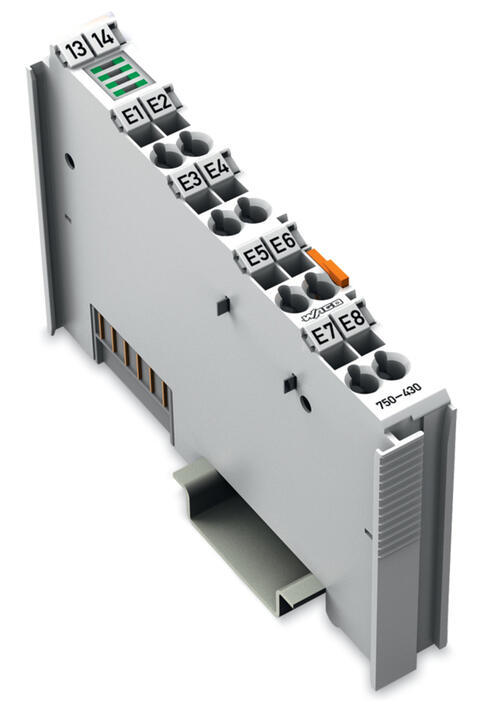
8-channel digital input; 24 VDC; 3 ms
Item no. 750-430

8-channel digital input; 24 VDC; 3 ms

Fieldbus Coupler ETHERNET; 3rd Generation
Item no. 750-352

Fieldbus Coupler ETHERNET; 3rd Generation

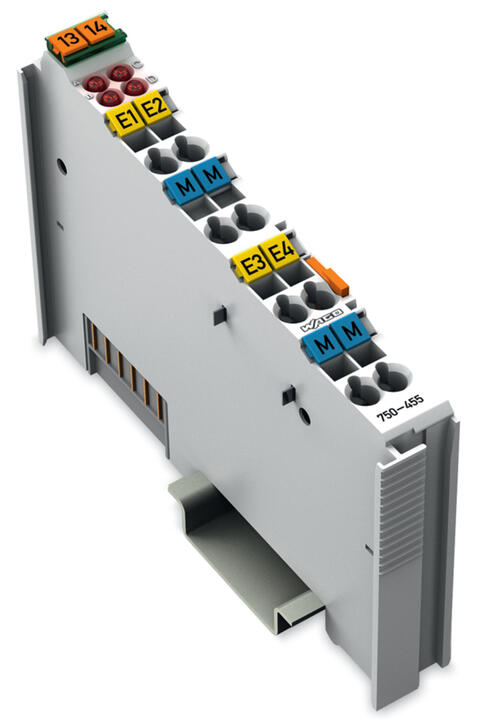
4-channel analog input; 4 … 20 mA; Single-ended
Item no. 750-455

4-channel analog input; 4 … 20 mA; Single-ended

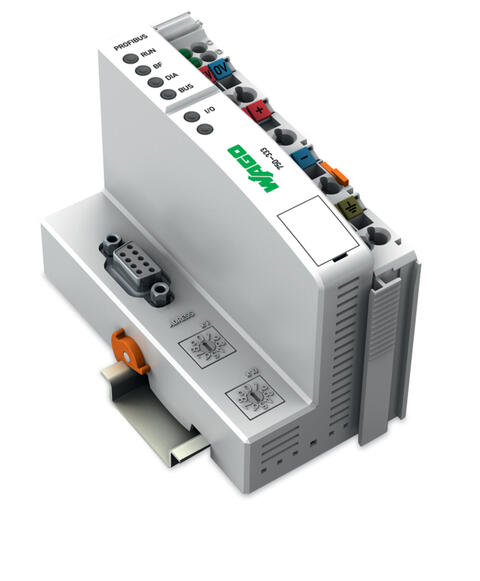
Fieldbus Coupler PROFIBUS DP; 2nd Generation; 12 MBd
Item no. 750-333

Fieldbus Coupler PROFIBUS DP; 2nd Generation; 12 MBd

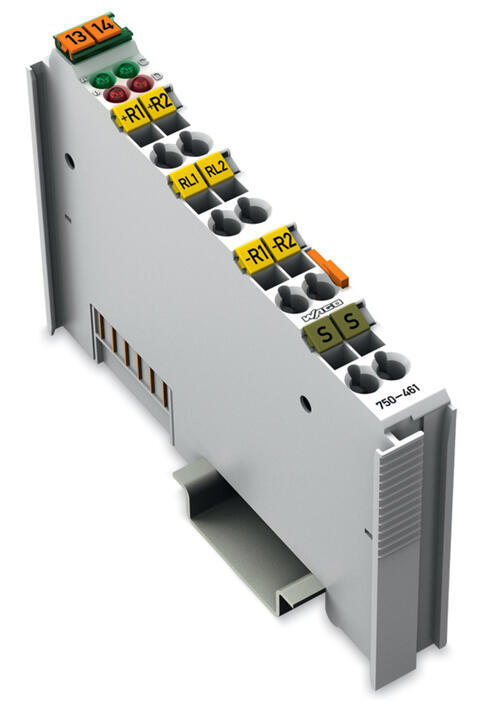
2-channel analog input; For Pt100/RTD resistance sensors
Item no. 750-461

2-channel analog input; For Pt100/RTD resistance sensors

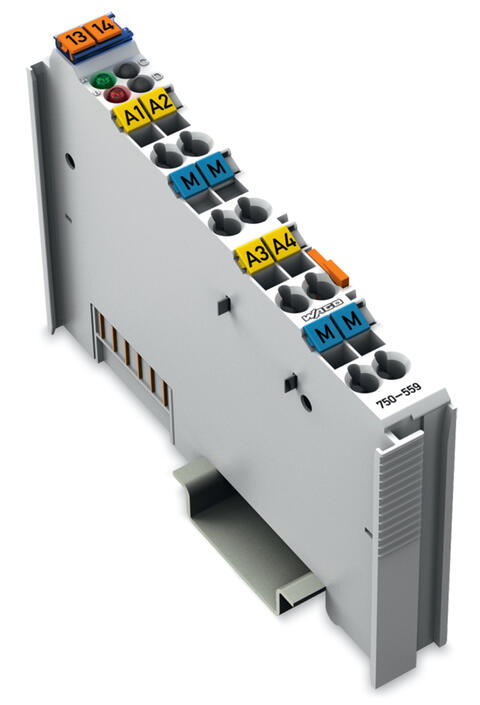
4-channel analog output; 0 ... 10 VDC
Item no. 750-559

4-channel analog output; 0 ... 10 VDC

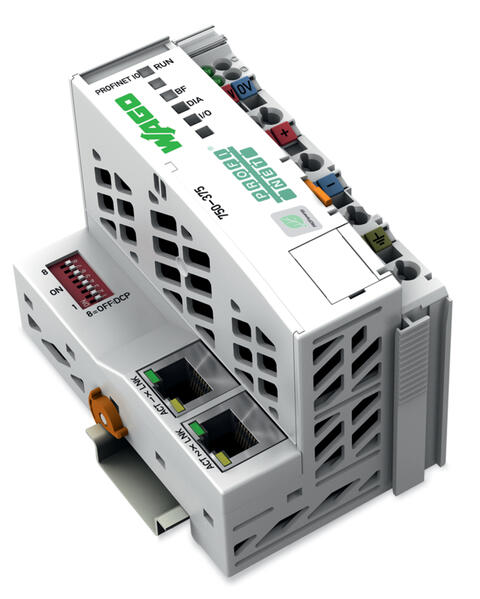
Fieldbus Coupler PROFINET IO; 3rd Generation; Advanced
Item no. 750-375

Fieldbus Coupler PROFINET IO; 3rd Generation; Advanced

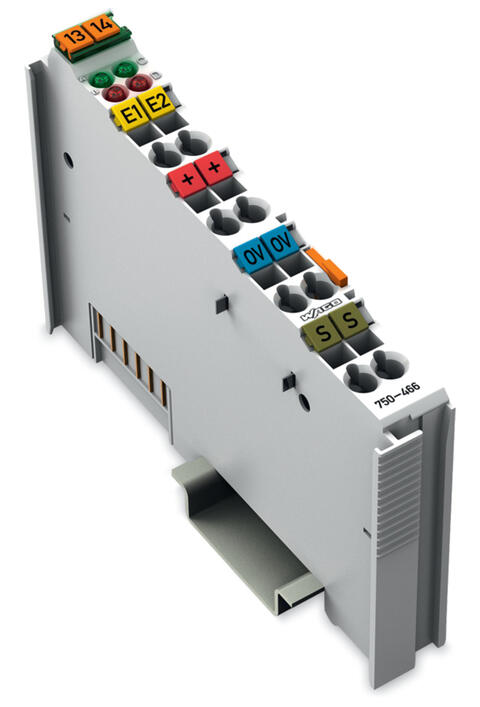
2-channel analog input; 4 … 20 mA; Single-ended
Item no. 750-466

2-channel analog input; 4 … 20 mA; Single-ended

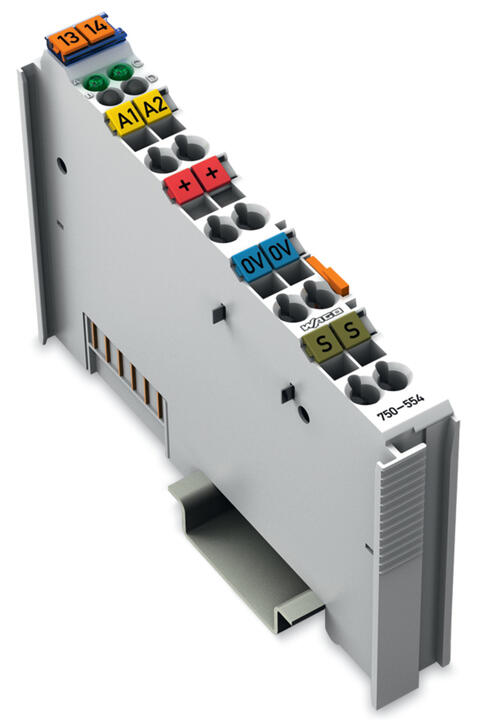
2-channel analog output; 4 … 20 mA
Item no. 750-554

2-channel analog output; 4 … 20 mA

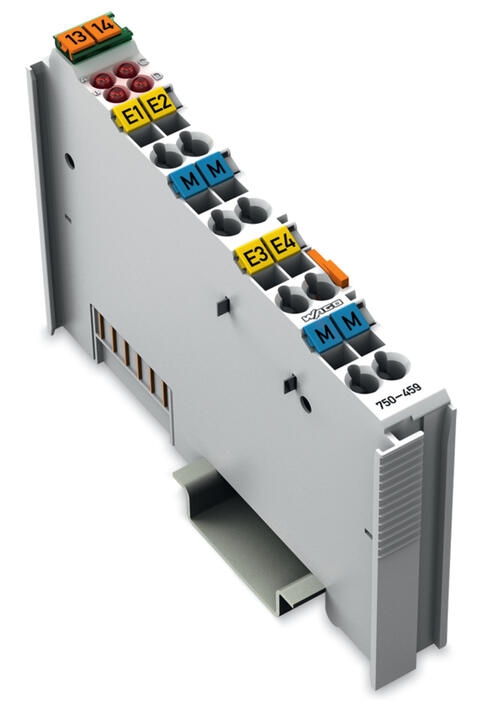
4-channel analog input; 0 ... 10 VDC; Single-ended
Item no. 750-459

4-channel analog input; 0 ... 10 VDC; Single-ended

logo_leitec_2000x1125.jpg

About the Company

Leitec® Gebäudetechnik GmbH sees itself as a forward-looking, energy-conscious company. Exemplary use of efficient, renewable energies to conserve resources and protect the environment is part of the company’s philosophy.

Your WAGO Contact

kontaktmodul_kundenservice_zentrale_300x300_1

Main Office

Mon-Thu 8 am - 5 pm CET

Fri 8 am - 3 pm CET

Additional service offerings: