Customer application

The Multilingual Transformer Station

  • 10/22/2021
  • The security of the power supply can be easily endangered – for example, when an overly enthusiastic backhoe operator damages electrical lines during an excavation. In such cases, a fast and, above all, targeted diagnosis of the electrical grid is essential, both along long spans and also in the distributed transformer stations. In the transformer station in the Wittmund wind farm, ENERCON relies on the WAGO PFC200 Telecontroller for signal processing and data transmission.

    ENERCON, headquartered in Aurich in northern Germany, is among the international technological leaders, with more than 26,300 wind turbines. In Wittmund, ENERCON constructed the facility, and it also operates the wind farm and transformer station. “There is increasing demand for turnkey solutions for wind farms from a single source, from planning, to construction, to supplying the electrical grid,” explains Gerd-Evert Meyer, Project Manager at ENERCON. Consequently, the company is seriously considering how to link wind farms into the smart grid and, above all, how to ensure the availability and monitoring of the systems, including the transformer stations.
    Product Highlights

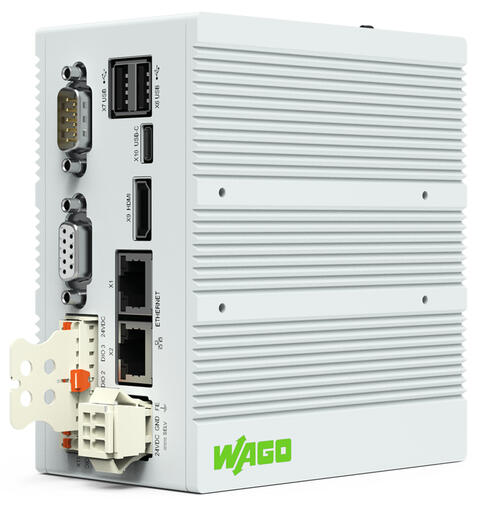
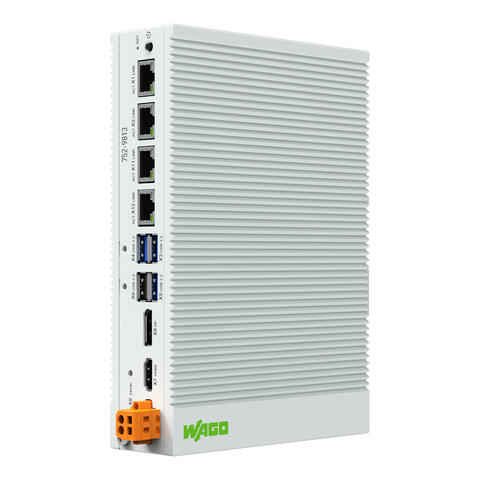
    Edge Computer; 4 x ETHERNET, 4 x USB, HDMI, DP; 32GB RAM; 256GB FLASH
    Item no. 752-9813

    Edge Computer; 4 x ETHERNET, 4 x USB, HDMI, DP; 32GB RAM; 256GB FLASH

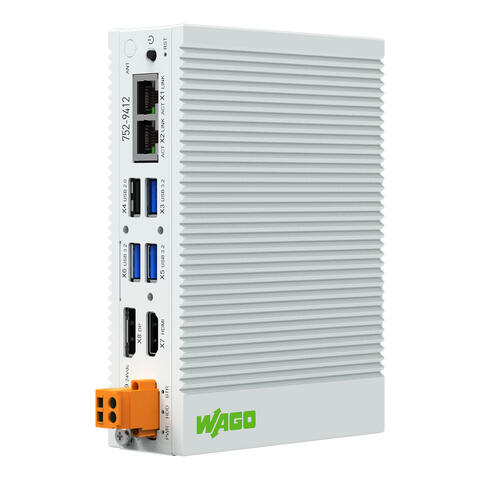
    Edge Computer; 2 x ETHERNET, 4 x USB, HDMI, DP; 16GB RAM; 128GB FLASH
    Item no. 752-9412

    Edge Computer; 2 x ETHERNET, 4 x USB, HDMI, DP; 16GB RAM; 128GB FLASH

    Edge Computer; 4 x ETHERNET, 4 x USB, HDMI, DP; 16GB RAM; 256GB FLASH
    Item no. 752-9800

    Edge Computer; 4 x ETHERNET, 4 x USB, HDMI, DP; 16GB RAM; 256GB FLASH

    Edge Controller; 2 x ETHERNET, 2 x USB, 1 x USB-C, HDMI, CAN, DI/DO, RS-232/485, Audio; Control
    Item no. 752-8303/8000-002

    Edge Controller; 2 x ETHERNET, 2 x USB, 1 x USB-C, HDMI, CAN, DI/DO, RS-232/485, Audio; Control

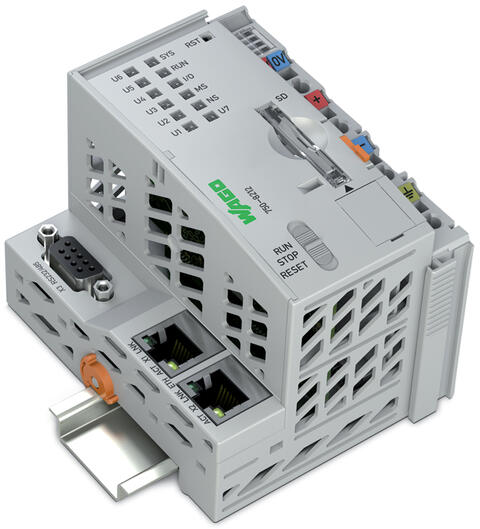
    Controller PFC200; 2nd Generation; 2 x ETHERNET, RS-232/-485; Telecontrol technology; Ext. Temperature
    Item no. 750-8212/025-001

    Controller PFC200; 2nd Generation; 2 x ETHERNET, RS-232/-485; Telecontrol technology; Ext. Temperature

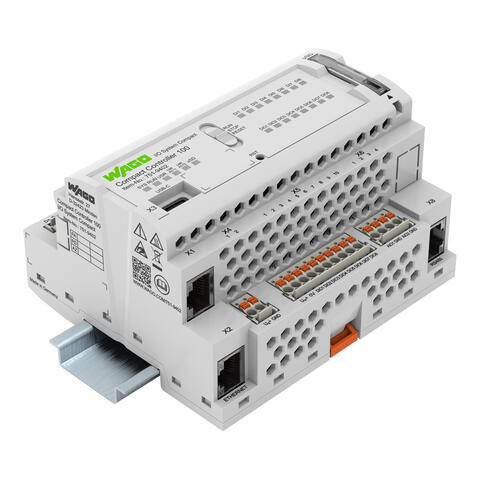
    Compact Controller 100; 8DI 8DIO 2AI 2AIO 2NI/PT 2RS485; 2 x ETHERNET; SD
    Item no. 751-9402

    Compact Controller 100; 8DI 8DIO 2AI 2AIO 2NI/PT 2RS485; 2 x ETHERNET; SD

    POWER CAGE CLAMP feedthrough terminal block (Three Phase Set); DIN 35 x 15 rail mount; 2-conductor; 4/0 AWG; 125 mm wide (25 mm wide each); multicolored
    Item no. 285-199

    POWER CAGE CLAMP feedthrough terminal block (Three Phase Set); DIN 35 x 15 rail mount; 2-conductor; 4/0 AWG; 125 mm wide (25 mm wide each); multicolored

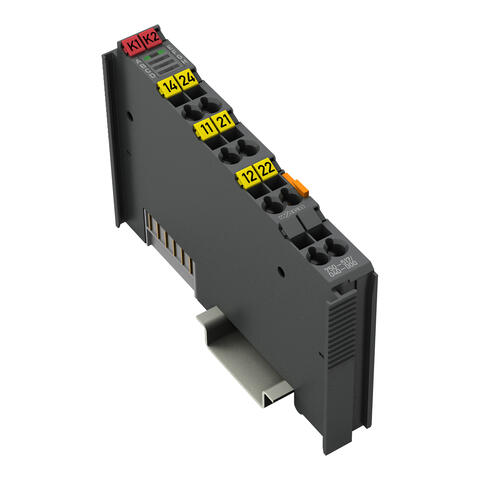
    2-channel relay output; AC 250 V; 1 A; 2 changeover contacts; Extreme
    Item no. 750-517/040-000

    2-channel relay output; AC 250 V; 1 A; 2 changeover contacts; Extreme

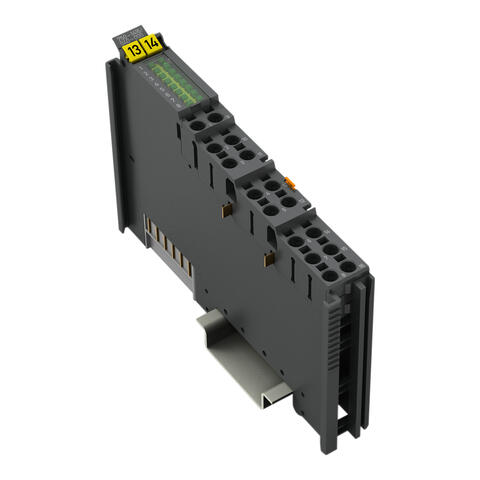
    8-channel digital input; 24 VDC; 0.2 ms; 2-conductor connection; Extreme
    Item no. 750-1416/040-000

    8-channel digital input; 24 VDC; 0.2 ms; 2-conductor connection; Extreme

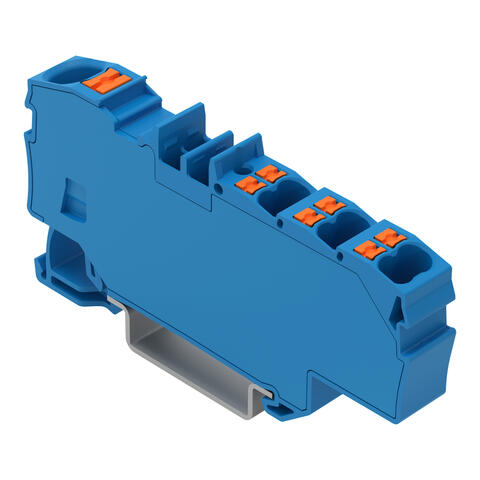
    Distribution terminal block; with push-button; 1 x 6 mm² / 6 x 1.5 mm²; with integrated end plate; for Ex e II and Ex i applications; side and center marking; for DIN-rail 35 x 15 and 35 x 7.5; Push-in CAGE CLAMP®; 6,00 mm²; blue
    Item no. 2206-8034

    Distribution terminal block; with push-button; 1 x 6 mm² / 6 x 1.5 mm²; with integrated end plate; for Ex e II and Ex i applications; side and center marking; for DIN-rail 35 x 15 and 35 x 7.5; Push-in CAGE CLAMP®; 6,00 mm²; blue

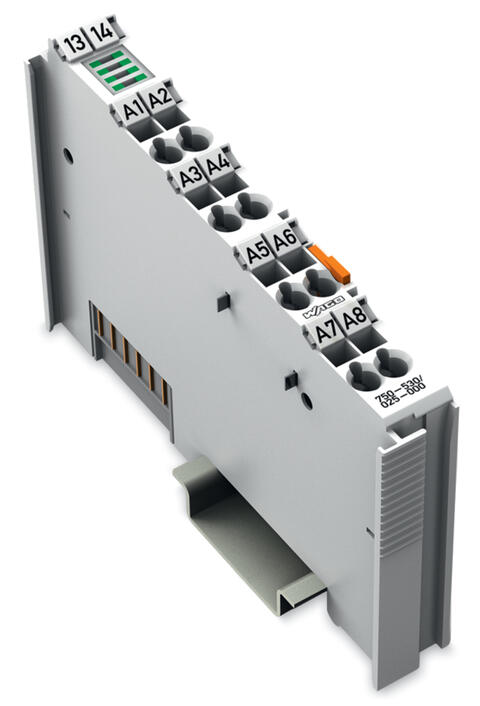
    8-channel digital output; 24 VDC; 0.5 A; Ext. Temperature
    Item no. 750-530/025-000

    8-channel digital output; 24 VDC; 0.5 A; Ext. Temperature

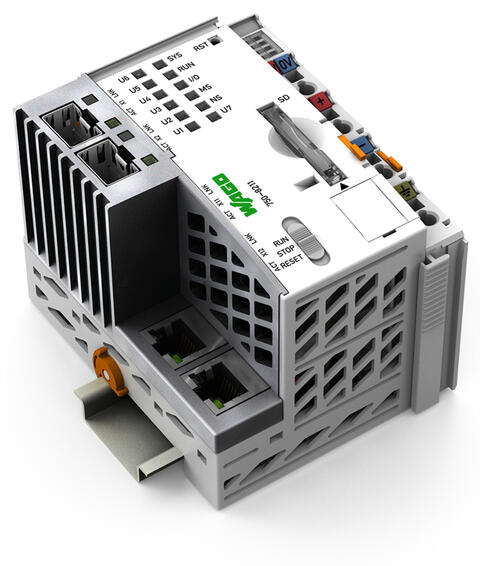
    Controller PFC200; 2nd Generation; 2 x ETHERNET, 2 x 100Base-FX
    Item no. 750-8211

    Controller PFC200; 2nd Generation; 2 x ETHERNET, 2 x 100Base-FX

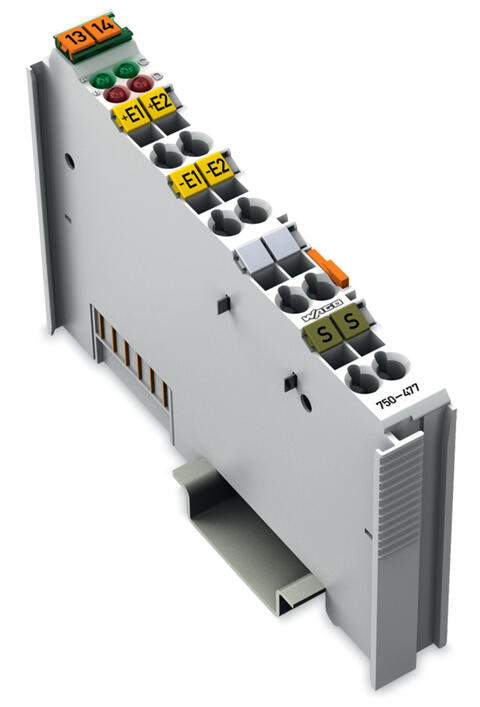
    2-channel analog input; 0 … 10 V AC/DC; Differential input
    Item no. 750-477

    2-channel analog input; 0 … 10 V AC/DC; Differential input

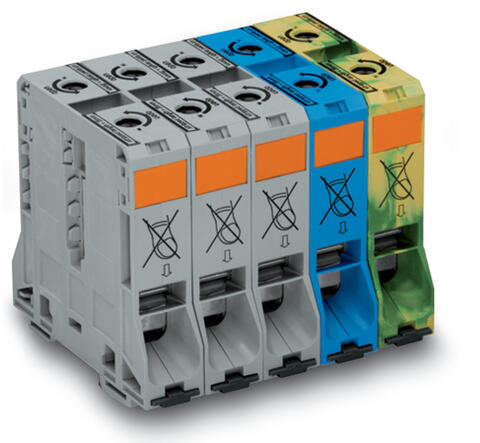
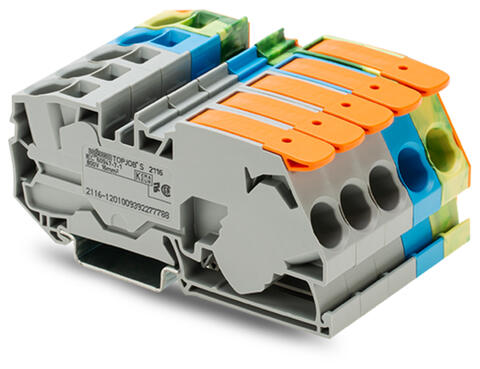
    Three phase set; with orange end plate; with 2-Conductor, Rail-Mount Terminal Blocks; with a lever and operating slots; 16 mm²; Push-in CAGE CLAMP®; 16,00 mm²; gray/blue/green-yellow
    Item no. 2116-1201/605-038

    Three phase set; with orange end plate; with 2-Conductor, Rail-Mount Terminal Blocks; with a lever and operating slots; 16 mm²; Push-in CAGE CLAMP®; 16,00 mm²; gray/blue/green-yellow

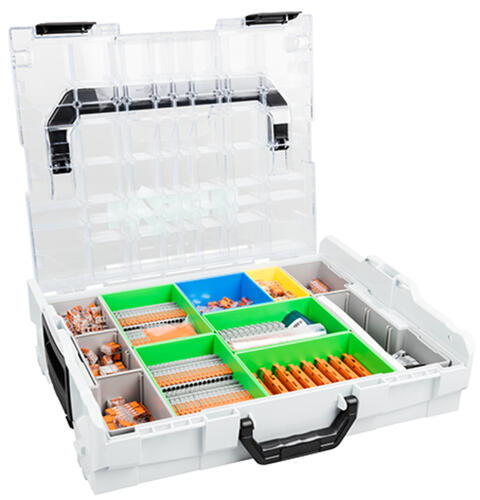
    Electrical interconnection set; L-BOXX® 102; 221 Series and TOPJOB® S with levers
    Item no. 821-153

    Electrical interconnection set; L-BOXX® 102; 221 Series and TOPJOB® S with levers

    The Story

    The Heart of the Communication

    With this goal in mind, the WAGO PFC200 Telecontroller plays a central communication role in the transformer station. First, it establishes the link between the network operator and the wind farm controller. It’s important to understand that the network operator uses a different language than is used within the wind farm and between the facility and its operator – namely ENERCON. The multiple languages are a result of different protocol standards for telecontrol technology. A serial, point-to-point connection, based on IEC 60870-5-101, is established between the network operator and the wind farm regulator. The data to be transmitted typically consists of requests for active power or reactive power. In addition to the acknowledgment of the setpoints, the actual output, wind strengths and additional weather data are then sent back “to make it possible to derive the output capability of the wind farm,” explains Meyer.

    In contrast, IP communication between the wind farm controller, the ENERCON control center and the PFC200 uses the “dictionary” of IEC 60870-5-104. “For us, the WAGO controller represents the largest communication node in the transformer station, and it manages everything,” explains the project manager. A third protocol, using IEC 60870-5-103, connects the technology within the transformer station. 103 communication represents the official standard in Europe for transmitting messages to digital protective equipment in the station control system. The protective devices can be understood here as slaves that transmit data cyclically or at the request of the master. In addition, signals are also received via digital inputs. Typical signals in a transformer station include door closure contacts, switch monitors and fill level or pressure sensors.

    Uninterrupted Monitoring Creates Security

    Virtually everything is monitored in a transformer station. While door contacts serve primarily to detect access, for example to prevent break-ins, linking the fill level sensors in the transformer base increases operating safety and protects both employees and the environment. The base must always be able to capture all of the oil from the transformer. If the water level were too high, for example, due to rain water or ground water in the foundation, the oil could no longer be captured, which could damage the environment.

    To ensure that signals are transmitted with no physical interruptions, ENERCON uses fiber optic cables within the transformer stations, which collect all connected components using a star coupler and in turn are connected to the PFC200 using a serial interface module. The switching devices for medium voltage are isolated using SF6 gas. If this gas escapes through a leak, then the switch is blocked by a locking mechanism. This is reported by the protective device via the IEC 60870-5-103 protocol to the PFC200, and from there via IEC 60870-5-104 to the ENERCON control center.

    Flexible Yet Standardized

    To program these functions, ENERCON uses the standardized languages of IEC 61131-3, which are included in the standard equipment of the PFC200. Programming via CODESYS offers Meyer the advantage that he can more easily adapt to the specifications of the network operator in the area where his wind farm and transformer station are located. This detail has recently become more important for systems that supply electricity outside of the Central European time zone, where it is necessary to combine different time stamps with each other. Based on Meyer’s experience with the high voltage systems, he can thus “easily program the second time stamp” within the WAGO controller. “I retrieved the variables and added or subtracted the time difference.” The PFC200 sends the data with the original time stamp to ENERCON in Germany and corrects it with the local time for the network operator. Features like this are why Meyer values the PFC200. “We have more options – we can make the programming easier and still retain standard communication despite individual adaptations.”

    The overall solution is based on having the telecontrol configurator automatically supply the relevant information and variables for data transmission from the depths of Linux® itself. “This is our great advantage. We can program freely, but we can also take advantage of a certain degree of standardization by using the telecontrol configurator.”

    „Sterownik WAGO jest dla nas największym węzłem komunikacyjnym, który w stacji transformatorowej wszystkim zarządza“.

    Gerd-Evert Meyer, ENERCON

    Three Languages for Security

    One System, Three Communication Protocols In light of the trend in building technology and automation towards standardizing communication and linking everything using ETHERNET, it is worth asking: Why do the three different universes even have to be linked at this point? The ENERCON employee justifies all this on the basis of differences in security requirements. “Communication inside of the station is implemented using the IEC 60870-5-103 protocol for serial data transmission, which is an economical standard in the area of protection technology. The signals are then sent to the ENERCON control center via a VP tunnel using TCP/IP, the IEC 60870-5-104 protocol. The network operator, in contrast, prefers a serial end-to-end connection, which is more difficult to influence than the TCP/IP protocol. We use the IEC 60-870-5-101 protocol here, which is usually converted by the network operator into IEC 60870-5-104 in its own network.” As a consequence, using three protocols is completely justified.

    Meyer and his team also like the fact that WAGO offers visualization in addition to the telecontrol and controller functions of the PFC200. “We would have to buy it for some cases anyway,” says Meyer and estimates that the visualizations created can be easily carried over to other projects, which ultimately will reduce the time required for development. The new device in Aurich has also received positive feedback, because the PFC200 can send SMSs or emails within the context of management. “This is unusual for a telecontroller,” says Gerd-Evert Meyer. Because the telecontroller can also process two separate communication networks, service technicians can now send messages over their own channel, while ENERCON operates a VPN tunnel in parallel. As part of further development, WAGO has also equipped the PFC200 with an integrated 3G modem. “Now we have three separate access points,” says Meyer with satisfaction.

    Text: Heiko Tautor | WAGO

    Photo: Thorsten Sienk

    Video

    Ageto Energy – Making Microgrid Energy Work

    Ageto not only monitors the voltage, charge and temperature of its battery storage system but also controls its operations. To bridge communication between the CAN-based battery storage system and a Modbus TCP/IP input on the microgrid controller. The commitment: to offer flexible, scalable, sustainable alternatives in microgrid solutions for the off-grid collection and distribution of energy.

    1. 00:01

      Ageto Energy – Making Microgrid Energy Work

    2. 00:02

      Energy Production

    3. 00:00

      Power Distribution